







 By Alexander Vinokurov
New Zealand's government is now co-funding AI adoption for small businesses through the AI Advisory Pilot — a real, current programme, not a marketing angle. But a funded AI plan and a working AI agent are two different things. This guide covers what the pilot actually funds, and what it takes to go from a plan to something running in production.
It launched in January 2026 for an initial 50 businesses, before growing to about 150. The 22 September extension was announced by Small Business and Manufacturing Minister Cameron Brewer, who said businesses had "put their hands up in strong numbers" and the feedback had been encouraging enough to back the pilot "with more places and more time." Source: Government extends AI support for small businesses, Beehive.govt.nz, 22 September 2026; programme background at MBIE.
Who is eligible?
MBIE and Beehive describe the pilot as targeted at small businesses that are already customers of the Regional Business Partner Network — the government notes it is "well targeted" for that reason. The 22 September announcement frames the audience broadly: "AI isn't just for big corporates with their own IT departments. With the right support, a local manufacturer, tradie or retailer can use it to cut the admin, work smarter and spend more time on what they do best." Neither release publishes a full eligibility checklist beyond that — confirm your business's specific eligibility with a Regional Business Partner advisor.
How to apply through a Regional Business Partner
The pilot is not something you apply for directly with MBIE. Businesses interested in the AI Advisory Pilot are directed to contact their local Regional Business Partner, or visit business.govt.nz, to find out whether they qualify and to start the process. The Regional Business Partner Network is the sole delivery channel — there are 15 regional providers around the country, and the co-funding runs through them rather than through an external developer directly.
What the pilot funds — and what it doesn't specify
MBIE's own language covers both ends of the work: businesses get support "to identify opportunities for AI and implement practical solutions in their day-to-day operations." What isn't spelled out publicly is exactly which suppliers can deliver the implementation stage, or whether funding can flow to a development partner outside the Regional Business Partner Network. If you're already working with a Regional Business Partner advisor, that's the right place to confirm the specifics before you commit a supplier.
The gap between an AI plan and a working AI agent
An AI plan tells you where AI fits and what to prioritise. It doesn't ship code. Most AI-focused providers active in New Zealand right now are positioned as consultants and automation specialists — strong on strategy, less often set up to design and build a production agent end to end. That's the specific gap this article is aimed at: what it takes to turn a funded AI plan into a shipped, working agent.
How we approach an AI agent build
99 Francs builds AI agents the same outcome-based way we build MVPs and websites: split into phases, no deposit, and you pay at the end of a phase only once you've seen it work — if you're still not satisfied after revisions, you owe nothing for that phase. For an agent specifically, that pairs naturally with sandbox validation: the agent proves itself in a safe environment before it touches anything that matters, and before you pay. The full process — feasibility checks, behaviour prototypes, tested action maps, provider fallbacks — is laid out in how we build AI agents.
Our track record, shown honestly
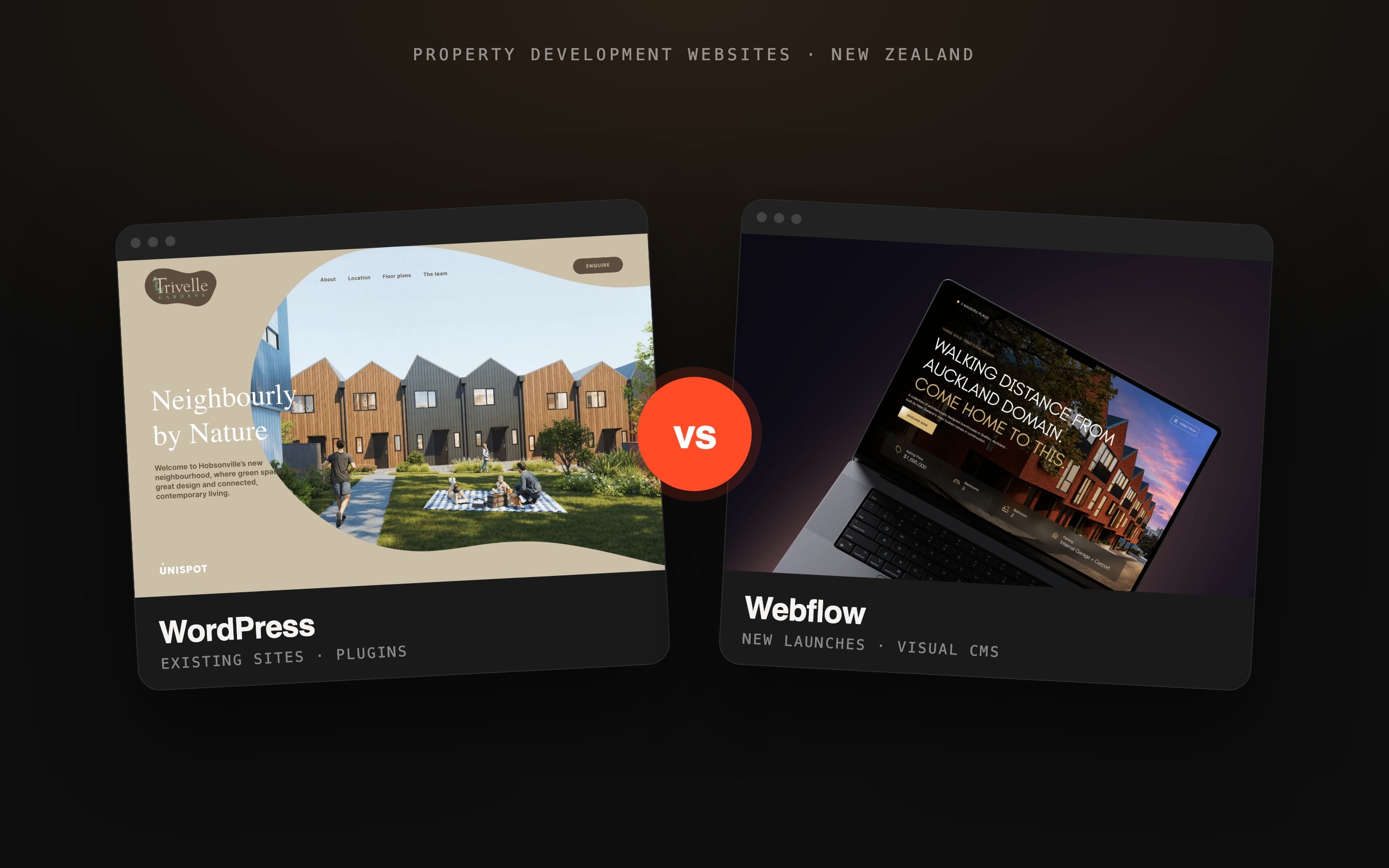
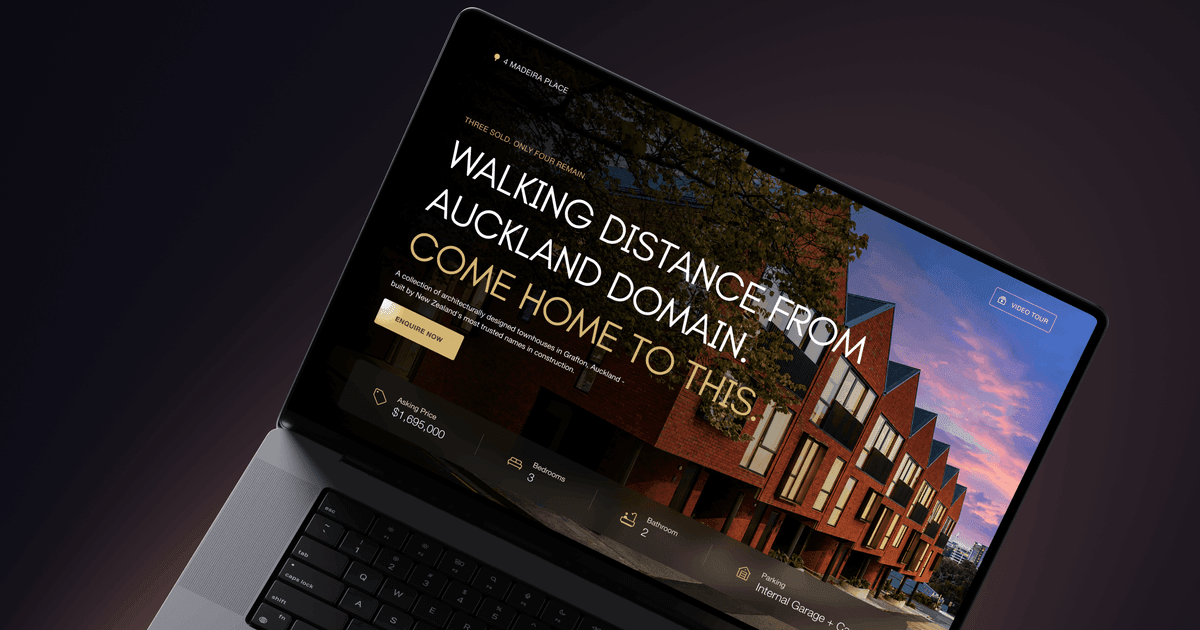
We haven't yet shipped a dedicated AI-agent project for a New Zealand client — we'd rather say that plainly than imply otherwise. What we do have, kept as two separate, real things: our AI-agent build process (above), and our New Zealand delivery record — 4 Madeira Place and The Pacifica Penthouse, both shipped remotely for the Auckland market in collaboration with Glasshouse Digital. If an AI agent is the next step for your business, weigh those two track records together, not a combined case study that doesn't exist yet.
What an AI agent build typically covers
- Customer-facing support agents that handle common questions and escalate the rest to a human.
- Internal ops agents that automate a specific repetitive workflow — triage, data entry, scheduling.
- Lead-qualification agents that pre-screen inbound enquiries before they reach sales.
- Agent-assisted internal tools built on your existing data and systems, not a generic chatbot bolted on top.
Getting started
99 Francs is not a registered Regional Business Partner provider, so we're not part of the pilot's advisor network directly. If you've already gone through the AI Advisory Pilot and have a plan, we can scope the first build phase around it. If you haven't, that's fine too — an AI agent doesn't need government co-funding to make sense, since the outcome-based model already removes most of the upfront risk. See AI agents and bots for the service, or web development for New Zealand if the agent is part of a wider website or product build.
Frequently asked questions.
Need this done instead of just read about it?
99 Francs is a senior product studio working outcome-based: no upfront payment, a fixed price per phase, and you pay at the end of a phase — only once you've seen it working. Tell us what you're building, and we'll reply with a phased plan and a fixed quote within one working day.