Agent workflow map
User goals, triggers, tool actions, handoff states, limits, fallback paths and where a human should stay in control.

HQ Paphos, Cyprus · worldwide
99 Francs designs and builds AI assistants, agent workflows, support bots, internal copilots and LLM product surfaces that are understandable, controlled and ready for production.
150+
shipped projects
$32M+
raised by clients
9,000+
tasks delivered
This service is for teams that need a custom AI assistant, workflow automation, chatbot, internal copilot, RAG flow or AI product designed, integrated, tested and launched by one senior team.
The work focuses on the visible experience and product logic: what the agent knows, what it can do, how users control it and how the workflow should behave.
User goals, triggers, tool actions, handoff states, limits, fallback paths and where a human should stay in control.
Conversation structure, prompt inputs, output states, review steps, confidence cues, error states and reusable UI patterns.
High-fidelity screens for copilots, support bots, internal assistants, AI search, dashboards and launch demos.
Agent logic, provider fallbacks, React or Next.js product surfaces, APIs, business-system integrations, tests and deployment.
We turn the agent concept into screens, states, boundaries and practical actions before engineering starts.
We design the surrounding product experience: onboarding, inputs, citations, escalation, approvals, history and reporting.
We package the AI workflow into a polished MVP surface or launch demo that makes the value visible quickly.
We make limits, confidence, human review and next actions visible so users know when to rely on the agent.
The process keeps AI capability, user control, product clarity and production reliability connected from the first workflow to launch.
We identify the workflow, user roles, data sources, allowed actions, risk points and what the agent should not do.
We design input, response, review, escalation, memory, error and handoff states before polishing the interface.
We produce the screens and interaction system for the assistant, bot, copilot, workflow or product demo.
We implement the agent and its product surface, connect the required systems, test the action map and validate it safely before production.
AI agents need interface clarity as much as model capability. These projects show product surfaces where complex systems had to become usable.
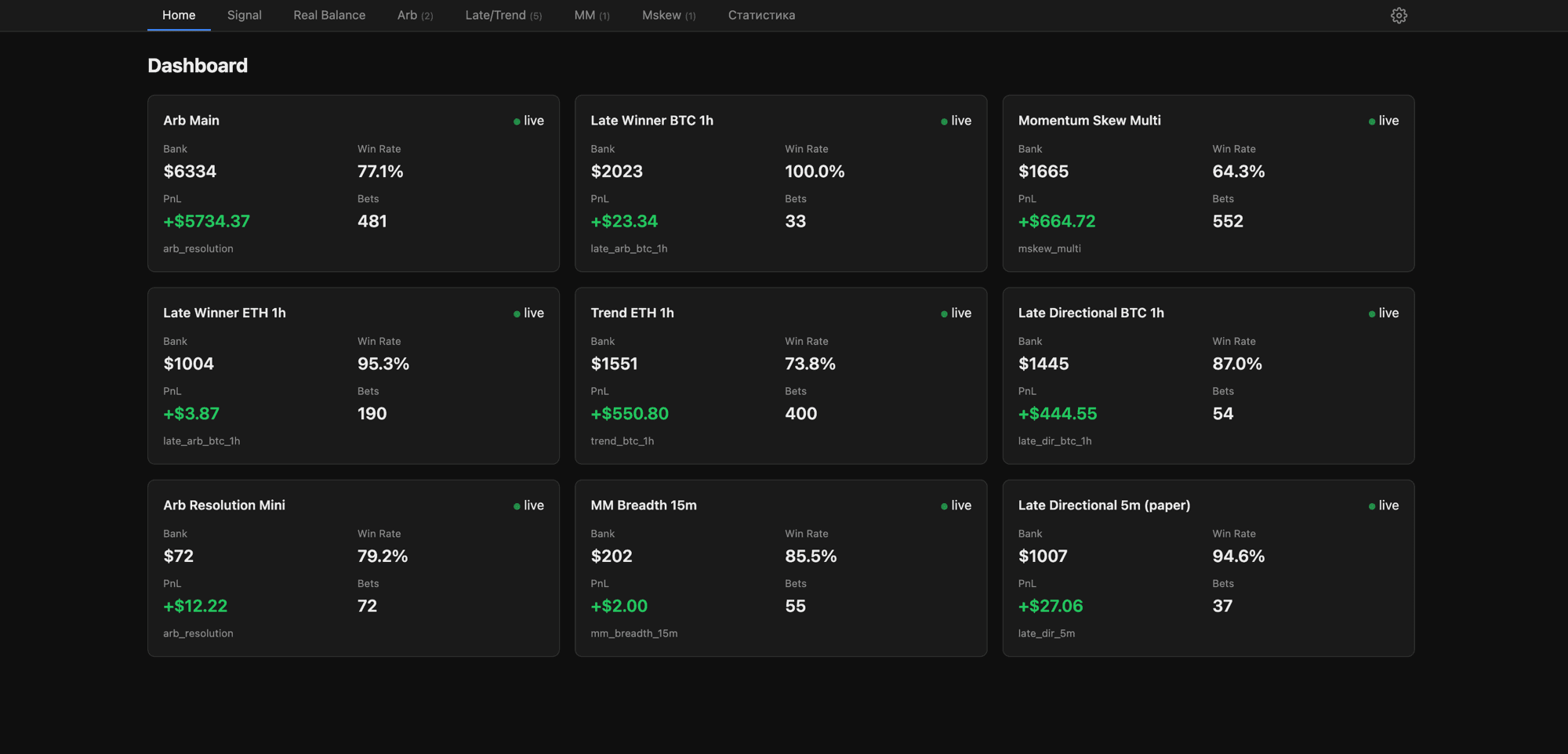
Algo trading
Custom automated trading and market-making system on Polymarket. A Python quant engine with a low-latency Rust execution core, a React dashboard, backtesting, and a safe virtual-to-real rollout.
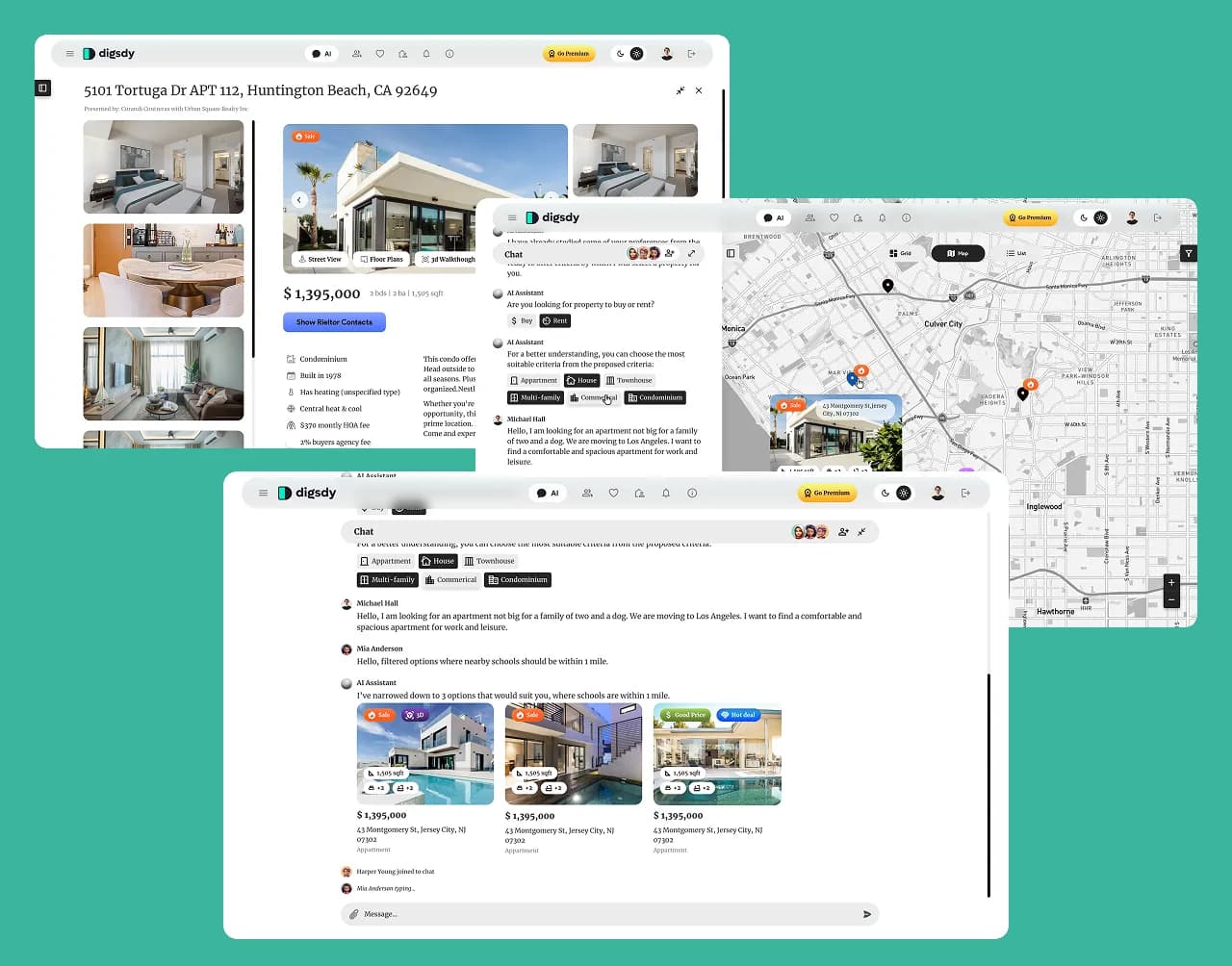
Mobile app
AI-powered real estate platform that understands user queries in chat, analyzes preferences, and delivers relevant property listings in real time. Built as an MVP in Webflow.