Interactive twin frontend
A web app surface for rooms, assets, facilities, maps, floor plans, 3D scenes or spatial models with clear navigation and states.

HQ Paphos, Cyprus · worldwide
99 Francs builds digital twin web surfaces: 3D viewers, building dashboards, data layers, controls, simulation states and operational interfaces for teams turning physical systems into usable software.
150+
shipped projects
$32M+
raised by clients
9,000+
tasks delivered
This service is for teams that need a working digital twin frontend, 3D or spatial viewer, smart building dashboard, IoT visualization layer, control interface, MVP demo or data-connected product surface that makes the physical system easier to monitor, explain and act on.
The scope focuses on the visible software layer: how users see the space, read system state, compare data, control modes and understand what changed.
A web app surface for rooms, assets, facilities, maps, floor plans, 3D scenes or spatial models with clear navigation and states.
Temperature, occupancy, energy, lighting, equipment, alerts or custom operational data visualized in a readable product interface.
Mode switches, speed controls, scenario views, status panels, filters, thresholds and safe interaction patterns for operators.
A focused prototype or launch-ready product surface that helps buyers, investors or internal teams understand the digital twin concept.
We turn a 3D model, floor plan, BIM file or spatial dataset into product screens, controls and states people can actually use.
We connect data to the space, asset or workflow it belongs to, so operators can understand where an issue is and what to do next.
We build an MVP-quality interface that shows the twin, the data layers, the controls and the business value in one coherent flow.
Digital twins need UX, frontend architecture, data-state thinking and visual hierarchy to move together from the start.
The process starts with the user job: what they need to monitor, compare, control, simulate or explain inside the physical system.
We define the physical space or asset, user roles, data layers, model inputs, critical states and the first operational decisions the twin must support.
We shape the viewer, dashboards, controls, legends, alerts, empty states and responsive layouts before implementation gets expensive.
We build the frontend surface with the right web stack, interaction states, reusable components and integration assumptions.
We package the experience for stakeholder review, sales demos, pilot users or the next development phase with clear handoff notes.
Digital twin development depends on the same product skills: spatial hierarchy, dense data, system state, technical credibility and clear user action.
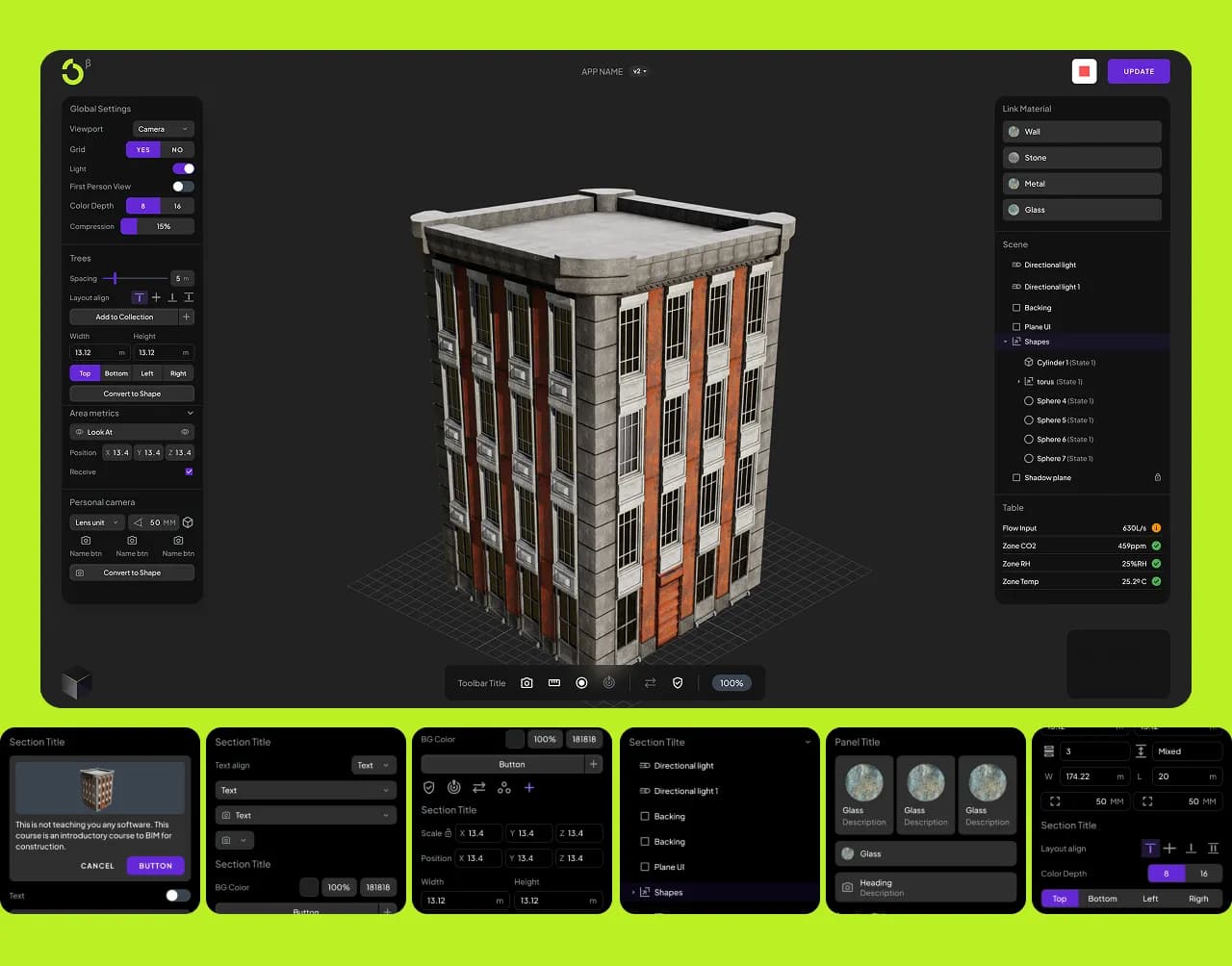
Visual coding
Web application for visual BIM coding with a modular interface and Framer landing pages showcasing 3D capabilities. Educational positioning with engaging, technical visuals.
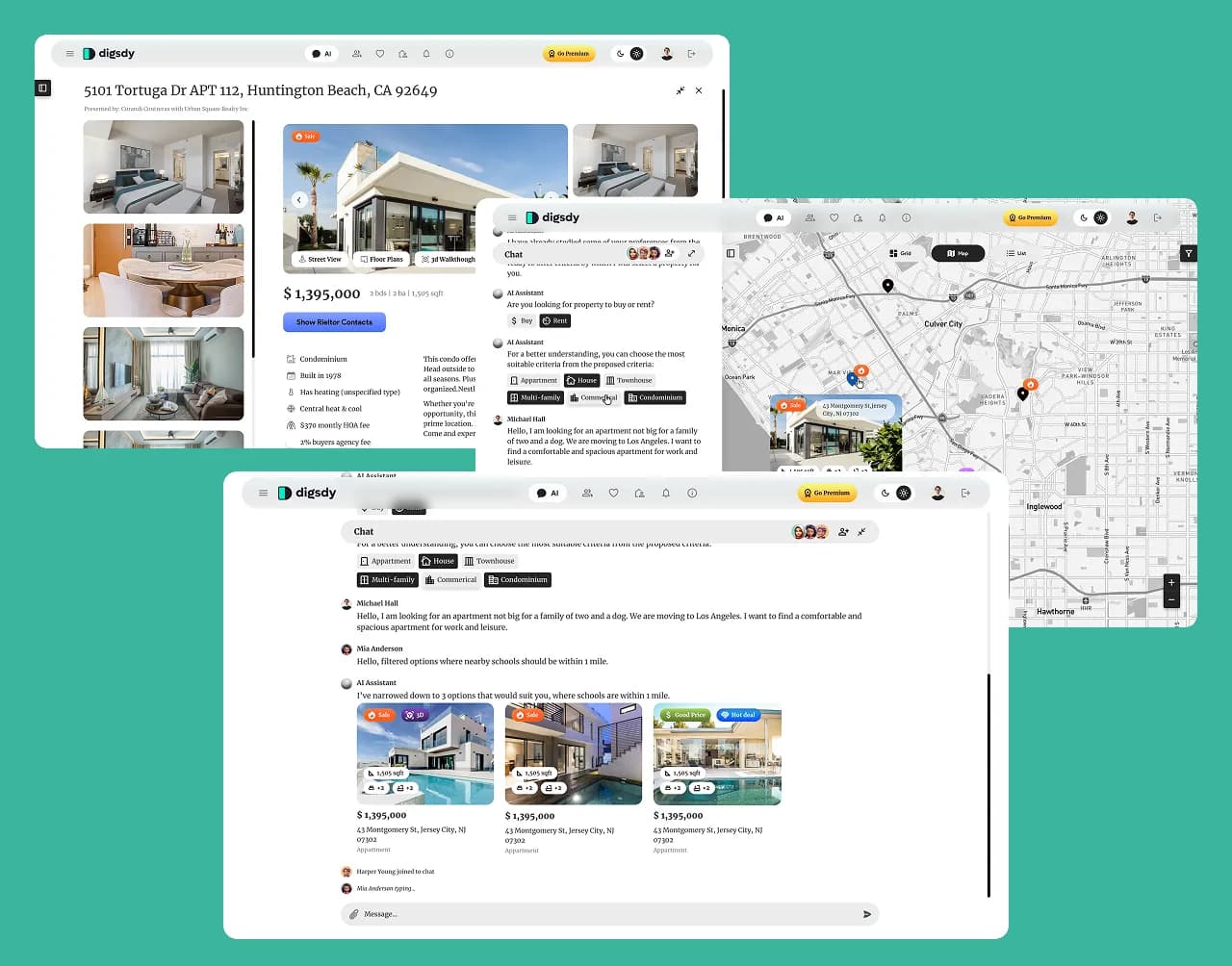
Mobile app
AI-powered real estate platform that understands user queries in chat, analyzes preferences, and delivers relevant property listings in real time. Built as an MVP in Webflow.