










36
pages
Service pages, the North Shore pages, offers, the quote page, the story page and the blog index.

HQ Paphos, Cyprus · worldwide
A1 Sure Services is a family-run tree removal and arborist company that has worked across Auckland since 2001. Its site ran on WordPress with the Divi theme: 36 pages and 155 blog posts built up over the years. Working as the contractor for Glasshouse Digital, the New Zealand agency that ran the project, we moved all of it to Webflow on the same addresses, redirected what was retired, and switched the domain over in October 2026.
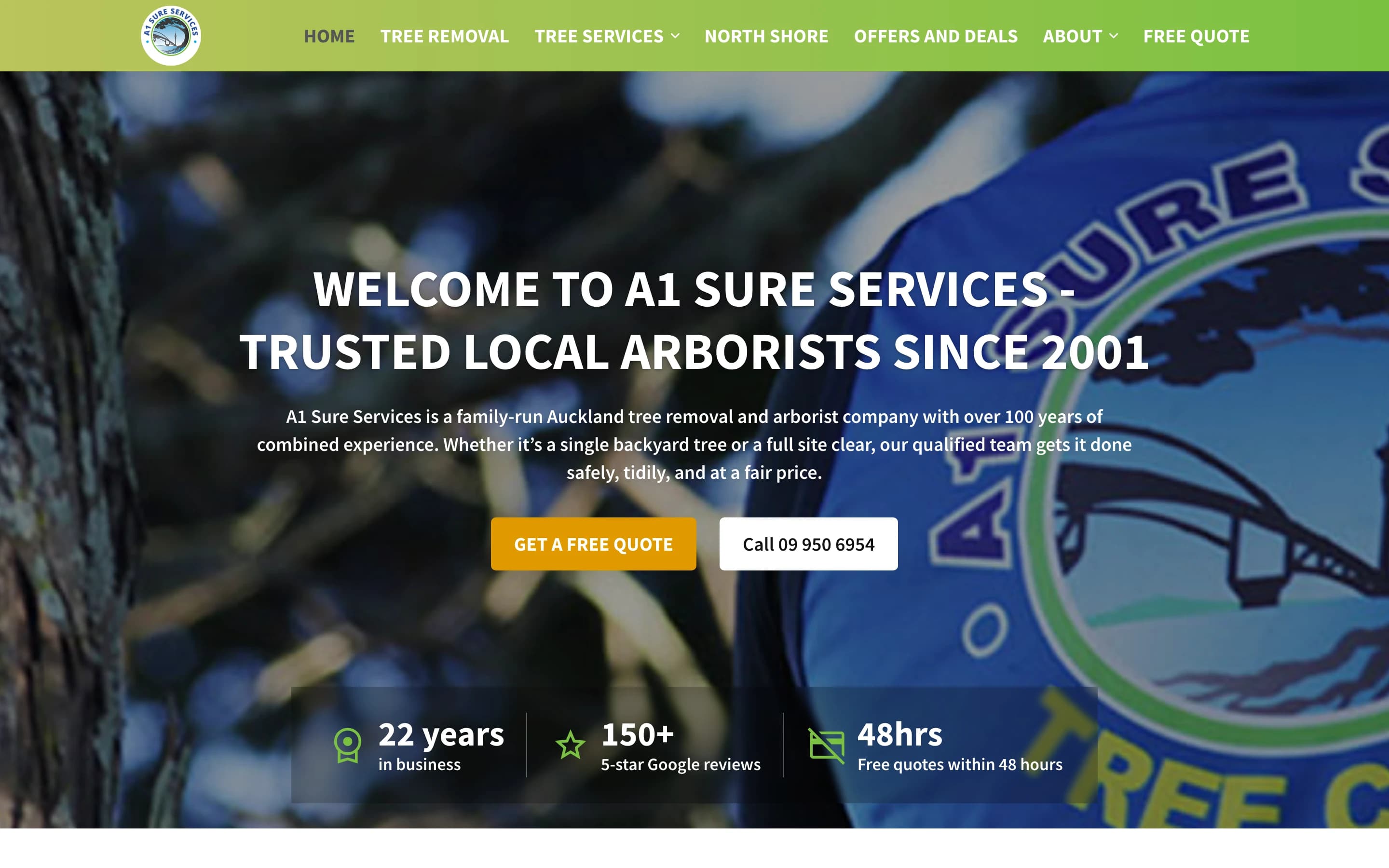

36 pages and 155 blog posts rebuilt in Webflow on their original URLs, with titles, descriptions and structured data carried over word for word. 257 thin tag archives closed with one redirect rule, 15 overlapping pages retired, 34 redirects verified one by one, and zero broken links on the final crawl before the domain moved.
A local service business lives on search. Every service page and every post on tree pruning, stump grinding or pohutukawa care was a URL Google already knew. The move to Webflow had to keep each of them working — and WordPress had put the posts at the root of the domain, where Webflow’s CMS cannot.
36
Service pages, the North Shore pages, offers, the quote page, the story page and the blog index.
155
All of them at the root of the domain, like /why-tree-pruning-is-important, not under /blog.
257
Thin pages listing two to five posts each, plus 15 category archives and one author page.
Each one trades a little of Webflow’s convenience for an address Google already trusts.
The one hard rule of the project. Each Webflow page took the exact slug of the WordPress page it replaced, even the awkward ones. Titles, meta descriptions, Open Graph tags and structured data were carried over word for word.
Webflow puts CMS items under a collection folder, so /why-tree-pruning-is-important would have become /blog/why-tree-pruning-is-important. Instead every post is a static page built from one shared template, at its original address. With no CMS needed, the site runs on Webflow's Basic plan.
The 257 tag archives were thin, so they were not rebuilt. One wildcard 301 sends every /tag/ address to the blog; category and author archives follow the same way.
Every post is a page made from one template, so they all share the same layout, sidebar and styles. The blog index and its 15 pages of older entries are rebuilt the same way, in the order the original listed them.
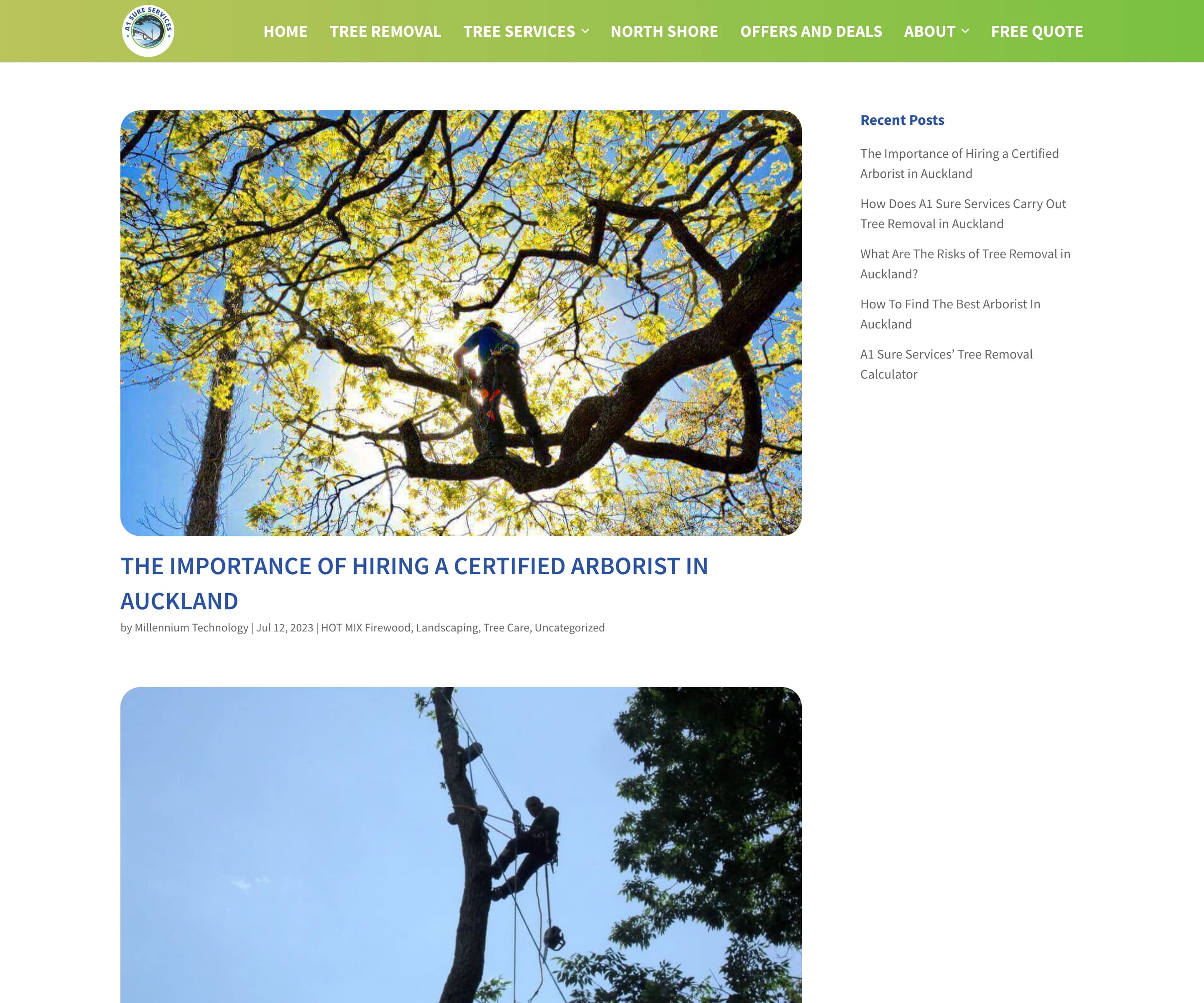
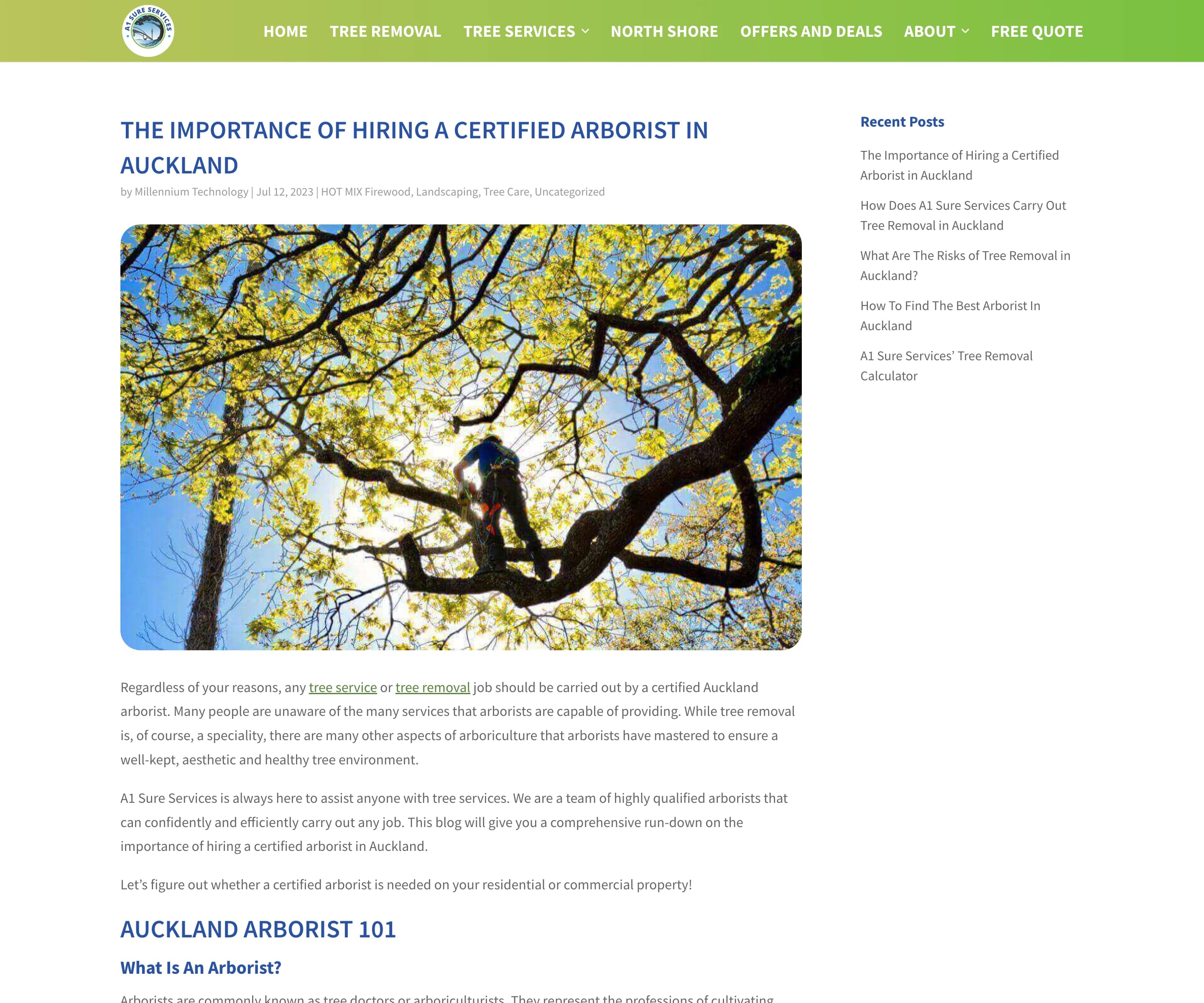
The site was built through Webflow’s MCP server with an AI agent doing the repetitive work. Every change was checked on the published site, not in the editor. How we use Webflow MCP in a migration
The URL list came from the WordPress sitemaps, not the menu, which hid several pages. Each URL was checked: a few were already WordPress redirects to other posts, so they became redirects again rather than pages.
Pages were rebuilt in Webflow with the original as the reference — header sizes, menu breakpoints, type and spacing were measured on the old site, not guessed. Header, footer, reviews, FAQ, the quote band and the contact bar are shared components, so no block is hand-copied between pages.
155 posts parsed out of the Divi markup and rebuilt from one template, with their featured images and in-article images. 111 images moved into Webflow's own asset library, so nothing loads from the old host.
Glasshouse Digital, which ran the project, sent a long list of requests to improve how the key service pages look. We built all of them: service pages rebuilt in the new layout of the redesigned tree removal page, a few slugs renamed, and 15 overlapping pages retired: nine North Shore copies of the service pages folded into one North Shore hub, the rest merged into the pages that replaced them.
34 rules in Webflow's 301 list, each checked with a request after publishing. Then every internal link that pointed at an old address — over 300 of them across the blog — was repointed to the final URL, so no internal link goes through a redirect.
Before the domain moved, a crawl of every published page checked for broken link targets, links through a redirect and anything still pointing at WordPress. All three came back zero, and on 7 October 2026 the domain was switched to Webflow.
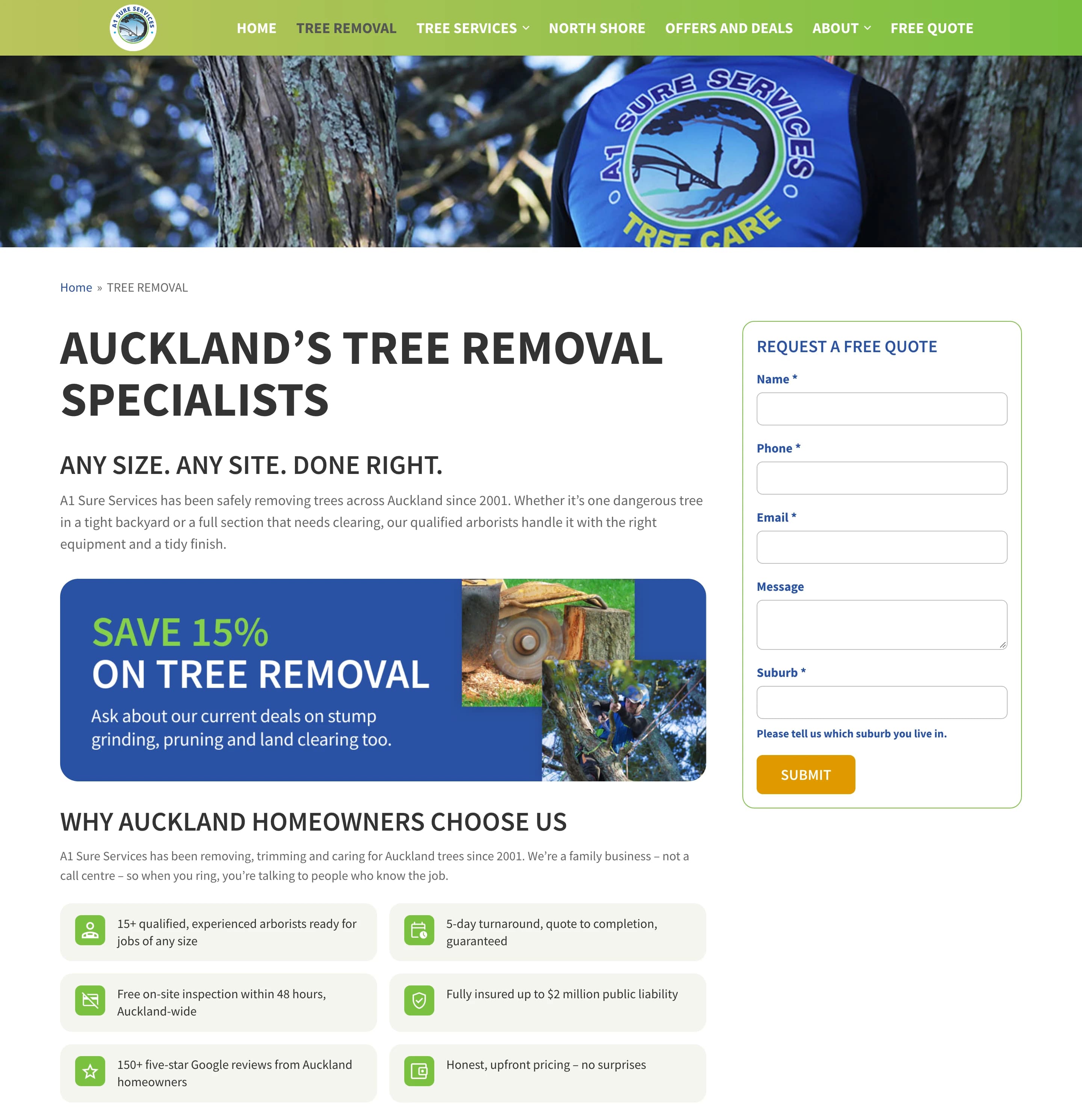
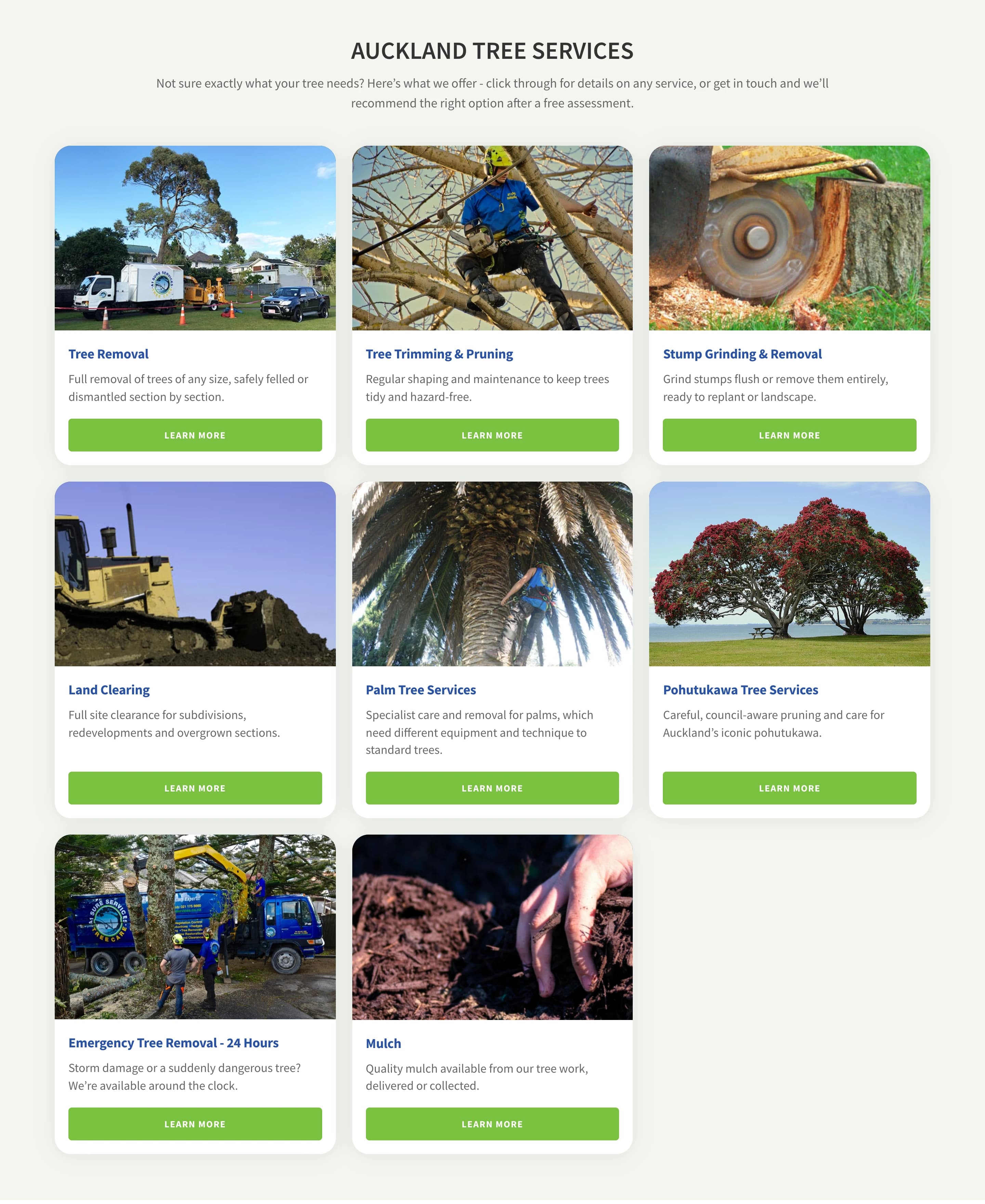
Glasshouse Digital, which ran the project, had many requests for improving how the key service pages look, and we carried out every one. The pages now follow the redesigned tree removal page: the offer, the reasons to choose A1 and the quote request at the top, then the detail. Tree trimming, stump grinding, palm trees, pohutukawa, land clearing, mulch and the emergency service were rebuilt in that layout, and the North Shore copies of each service were folded into one hub page.

Counted on the final crawl of the published site, before the domain was switched on 7 October 2026.
190
Every page and post that was kept, on its original address, in the sitemap Webflow now serves.
34
Retired pages, renamed slugs and the tag, category and author archives, all redirected to a live page.
0
No broken internal links, no internal links through a redirect and no references to the old WordPress host.
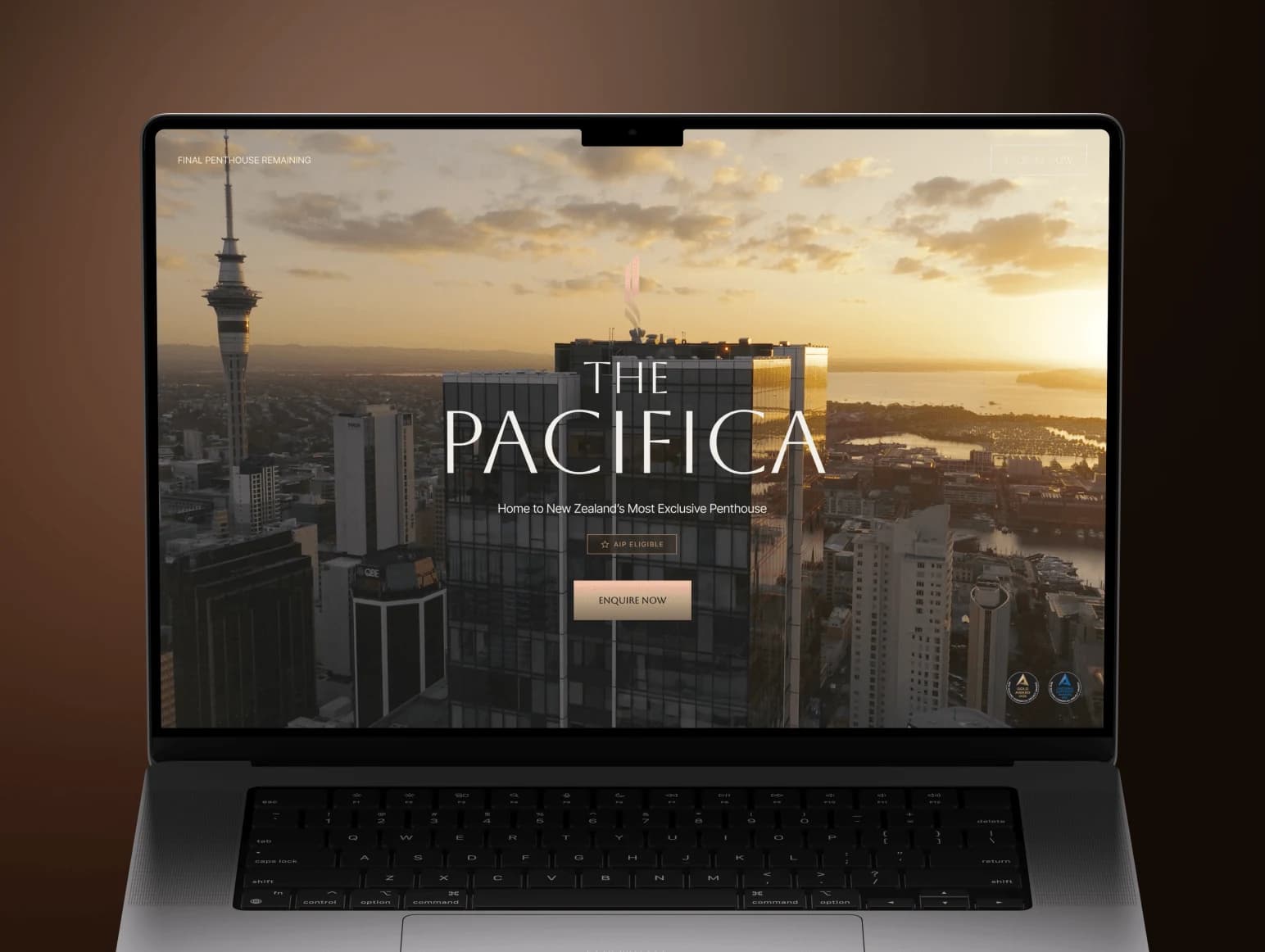
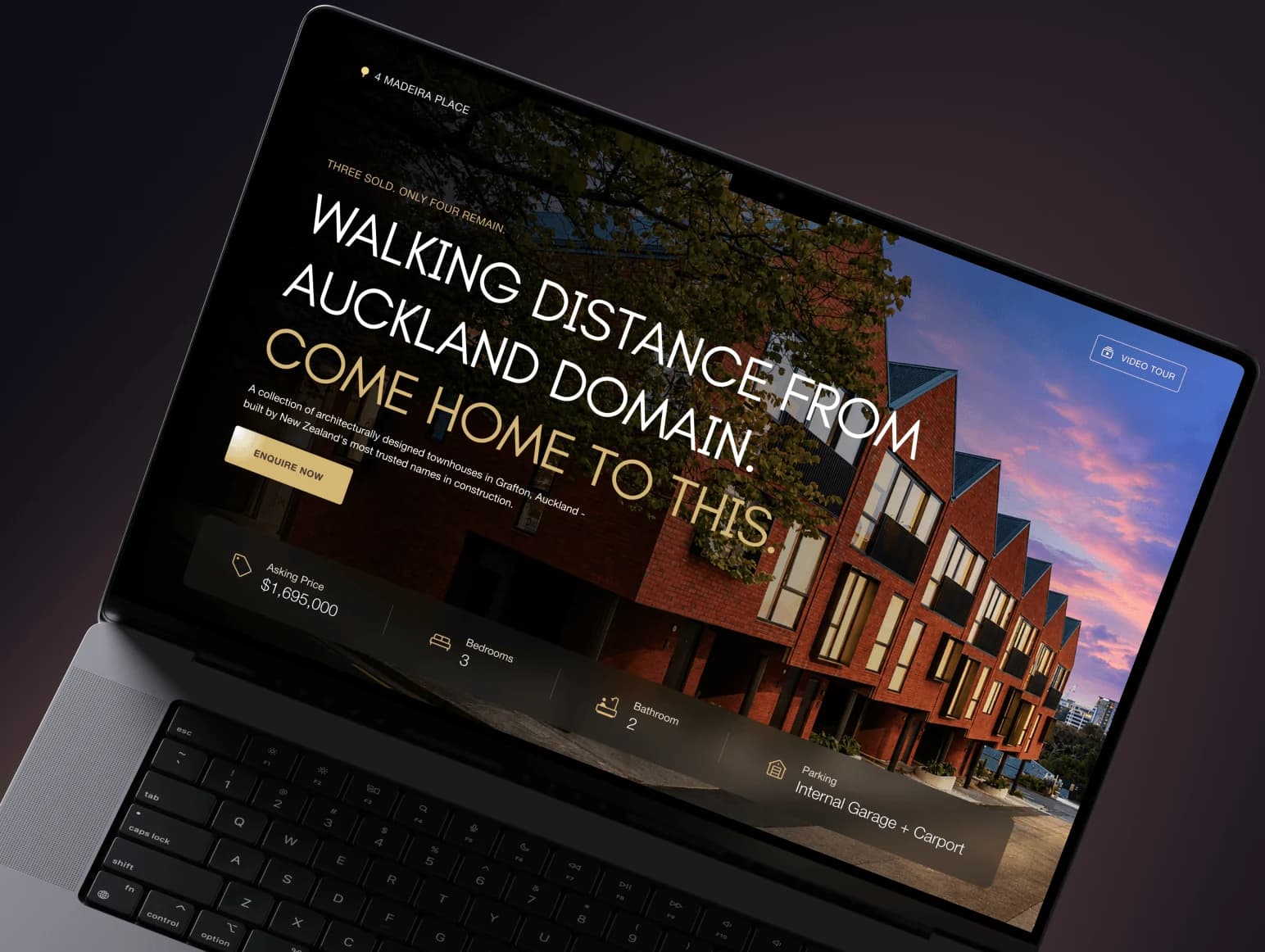
Glasshouse Digital, an Auckland agency, ran the project and the communication with A1 Sure Services. We did the migration and every change the agency asked for along the way. It is the same arrangement as the Vines Estate campaign page and the Dawsongroup TCS homepage.
Webflow's MCP server lets an AI agent build pages, restructure CMS collections and apply SEO metadata across a whole site. Here is what that changes at each stage of a WordPress-to-Webflow migration — and the parts it changes nothing about.
Is Webflow good for SEO, and what should a Webflow SEO agency in New Zealand actually do? What the platform handles natively, the setup mistakes we see, local and AI-search work, and what it costs in NZD.
Moving off WordPress, but not off page one?
Send us your site. We start from the URL inventory, keep every address that earns traffic, redirect the rest and check the result on the published site before the domain moves.
By crawling the published Webflow site rather than trusting the editor. Every published page was fetched and checked for broken link targets, internal links that go through a redirect, and any reference left to the old WordPress host. Each redirect was requested once to confirm it returns a 301 to the right page. The domain moved only after all of it came back clean. The full checklist is on migrating to Webflow without losing SEO.
Yes. A1 Sure Services is a typical case: a WordPress site with years of blog posts and a page builder holding the layout together. We start with the URL inventory, keep every address that earns its place and redirect the rest. See WordPress to Webflow migration and Webflow development in New Zealand.