


 By Alexander Vinokurov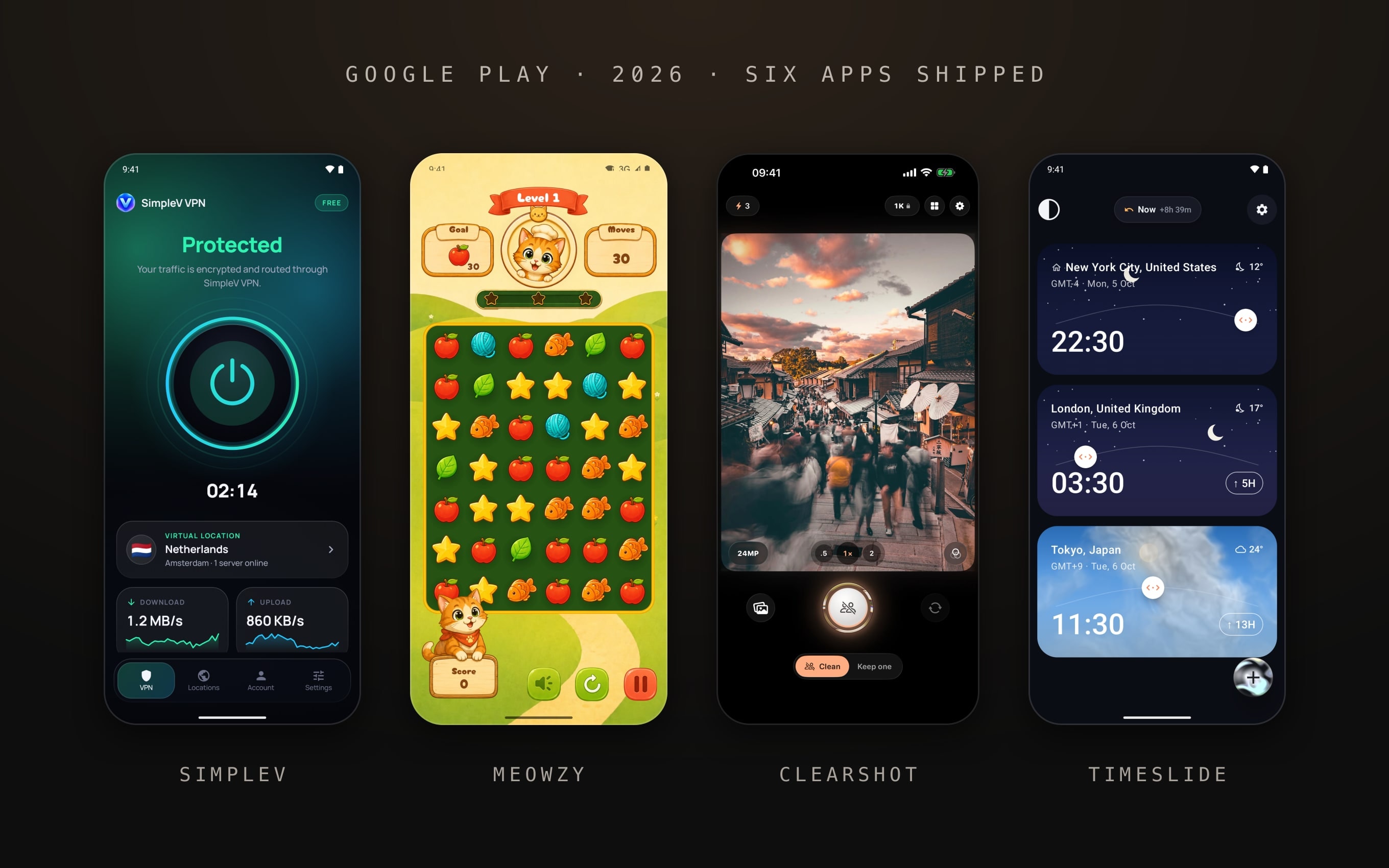
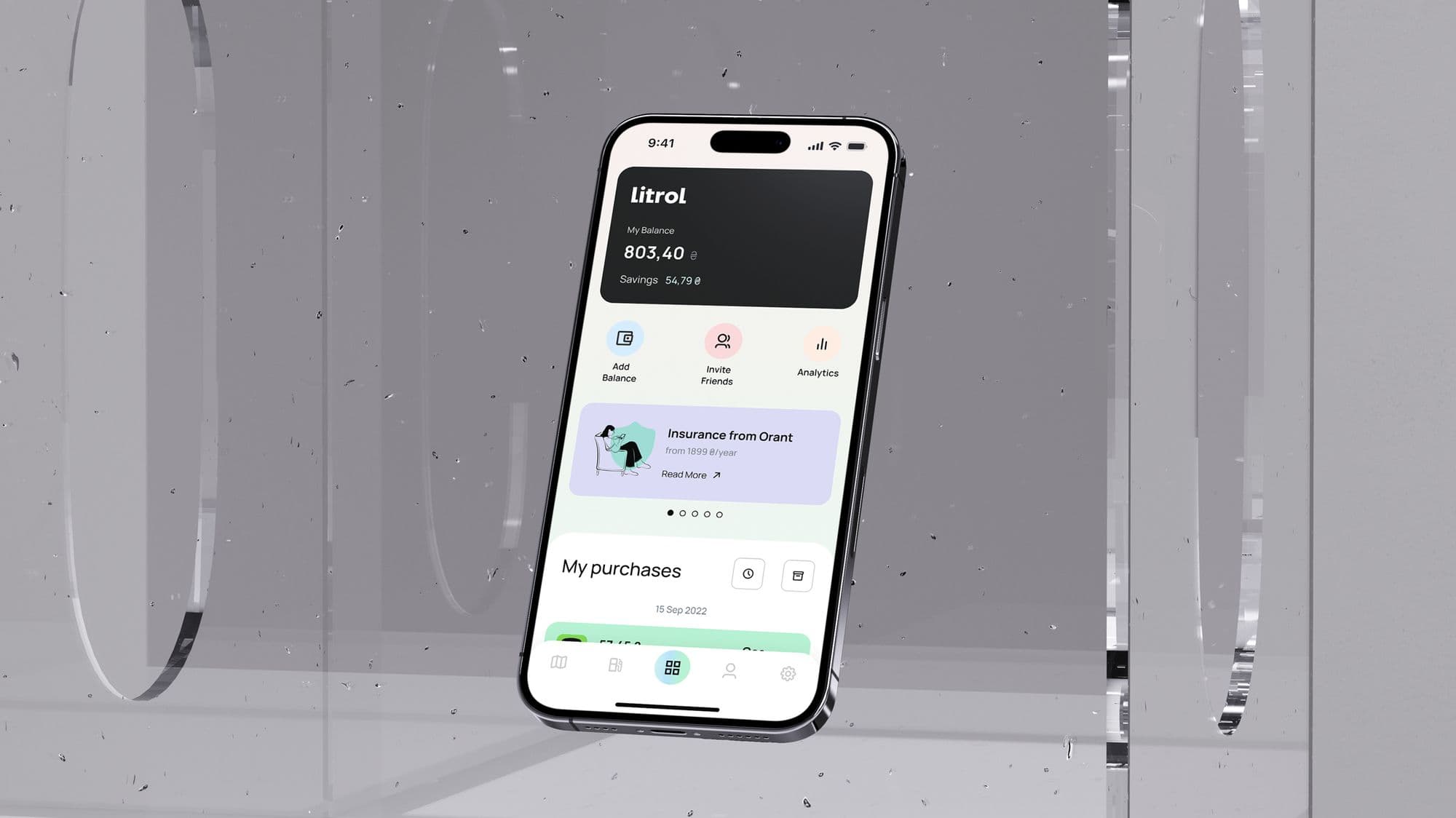
In 2026 we shipped six of our own apps to Google Play: SimpleV, a VPN; Meowzy, a match-three game for children; ClearShot, an AI camera; Meridian Radio; Timeslide, a world clock; and My Chess Rating. None of the delays on the way to production came from the code. They came from Google Play's rules and from things that only break once Play itself delivers the app. This is the list we now plan every Android launch around.
Google Play's requirements in October 2026
Each of these is checked before a release can go out. All of them were confirmed against Google's own documentation on 12 October 2026.
| Requirement | What Google Play asks for | What it does to the timeline |
|---|---|---|
| Closed testing (new personal accounts) | Personal accounts created after 13 November 2023: at least 12 testers opted in continuously for at least 14 days, then a production access application | Two weeks at minimum, plus a review that usually takes up to seven days. A tester who leaves early restarts their own clock |
| Target API level | From 31 August 2026, new apps and updates must target Android 16 (API level 36); Wear OS and Automotive target API 35 | An extension can be requested to 1 November 2026. Libraries that lag behind can block the upgrade |
| 16 KB memory pages | Apps targeting Android 15 and higher must support 16 KB page sizes on 64-bit devices | Updates that do not support them cannot be released from 1 February 2027. Any app with native libraries needs every .so checked |
| Data safety form | Required for every app, including closed and open testing tracks, even one that collects no data, with a privacy policy link | Has to match what the app and its SDKs actually do. An ads or analytics SDK counts |
| Account deletion | If users can create an account: deletion inside the app and a web link to request it, removing the associated data | A server endpoint, a screen and a public page, all before review |
| Android developer verification | Developers must be verified; user-facing enforcement started 30 September 2026 in Brazil, Indonesia, Singapore and Thailand | Expands to certified Android devices worldwide in 2027, and applies to apps outside Google Play too |
Sources: testing requirements for new personal accounts, target API level, 16 KB page sizes, Data safety, account deletion and developer verification.
How long Google Play review actually took
Production review for our apps took between three or four days and about a week. The outlier was SimpleV: submitted for production review on 25 September 2026 and live on 5 October, ten days later. The pattern that mattered more than any single app was the account's history: once the account had its first app approved, later submissions cleared review noticeably faster. A brand-new account should plan for the slow end on its first release, and a rejection restarts the wait, so every avoidable rejection below costs days, not minutes.
Decide the account type first
The single biggest timeline decision is made before any code: whose developer account the app is published under, and whether it is a personal or an organization account. We publish under an organization account, so the 12-tester, 14-day closed test never applied to any of our six apps. A founder who opens a personal account in their own name the week before launch inherits at least three weeks of testing and review that a company account does not have.
- An organization account needs a D-U-N-S number for the company. Dun & Bradstreet issues it free of charge; services that charge for it are optional middlemen.
- Open the account in the client's company name, not the agency's, so the app, its reviews and its revenue stay with the business that owns it.
- Start developer verification as soon as the account exists. It is identity paperwork, and paperwork is what stalls when it is left to launch week.
- If a personal account is the only option, recruit the 12 testers before the build is ready, so the 14 days run in parallel with the last sprint rather than after it.
What actually delayed our six apps
Every item below cost us time on a real release. None of them shows up in a local build or an emulator, which is exactly why they surprise teams.
- A dead privacy policy link got an app rejected. We bought a new domain for one product and moved its site there. The privacy policy URL in the Play listing still pointed at the old address, and the release was rejected for it. The fix took minutes; the review round trip took days. Check every URL in the listing, the Data safety form and the app itself after any domain or site move.
- 16 KB pages blocked SimpleV's release. The VPN ships native WireGuard libraries, and Play refused the production release until they were aligned to 16 KB pages. It took a newer tunnel library and a check of every .so file before each release.
- Google Sign-In worked in testing and failed from Google Play. Play re-signs the app with its own app signing key, so the OAuth client needs the SHA-1 of the certificate Play signs with, not only the upload key's. We confirmed it from an APK Play actually delivered.
- Subscriptions need a server, not just a button. SimpleV and ClearShot verify Google Play Billing purchases on our backend, with real-time developer notifications arriving through Pub/Sub, and a purchase already bound to one account is refused on another. Plan the backend work alongside the paywall.
- A children's game carries its own rules. Meowzy is aimed at children, so its AdMob setup is child-directed and its daily reminder stays off until the player turns it on. Families requirements shape the ads, the permissions and the listing, so settle them before design, not at submission.
The same kind of trap exists on the other store. Apple rejected Meowzy's App Store screenshots because one of them said "Free" in a game for children. Store creatives are reviewed as strictly as the build, so we now check every screenshot caption against both stores' rules before upload.
Store listings take longer than teams expect
A listing is copy, screenshots, a feature graphic, a content rating questionnaire, the Data safety form and the privacy policy, and every language multiplies it. Meridian Radio launched with listings in 10 locales and keyword research per storefront; Meowzy, ClearShot and Timeslide each ship in eight languages. Treat the listing as its own workstream with its own owner, started while the app is still being built.
Our pre-submission checklist
- Developer account in the client's company name; organization type with a D-U-N-S number; developer verification started.
- targetSdk set to the current requirement (API 36 for new apps and updates from 31 August 2026).
- Every native library checked for 16 KB alignment; the APK checked with zipalign for 16 KB pages.
- Play App Signing on; the app signing key's SHA-1 registered with Google Sign-In, Firebase and any other API that checks the certificate.
- Data safety answers matched against every SDK in the build, including ads and analytics.
- Account deletion in the app and on a public web page, if the app has accounts.
- Privacy policy, support and marketing URLs opened from the live listing, on the final domain.
- Screenshots and captions free of pricing claims or wording the target audience rules forbid.
- Billing purchases verified server-side, with real-time notifications wired up before the first paid user.
How we plan an Android launch
The account, the policy work and the listing start in week one, next to design. The build is tested from an internal testing track as early as possible, because that is the first time the app is signed and delivered by Play, and the first time sign-in, billing and native libraries behave as they will for users. By the time the last feature lands, the listing, the Data safety form and the deletion flow are already done, and production review is the only thing left to wait for.
We design and build Android apps in Kotlin and Jetpack Compose and take them through Google Play to production, as part of our mobile app development work. Every app named here is live on Google Play, and each case study links to its listing.
Frequently asked questions.
Planning an Android app?
Tell us what you are building and when it has to be live. We will plan the account, the Google Play policy work and the build together, with a fixed scope per phase and no upfront payment.