






One tap, no account
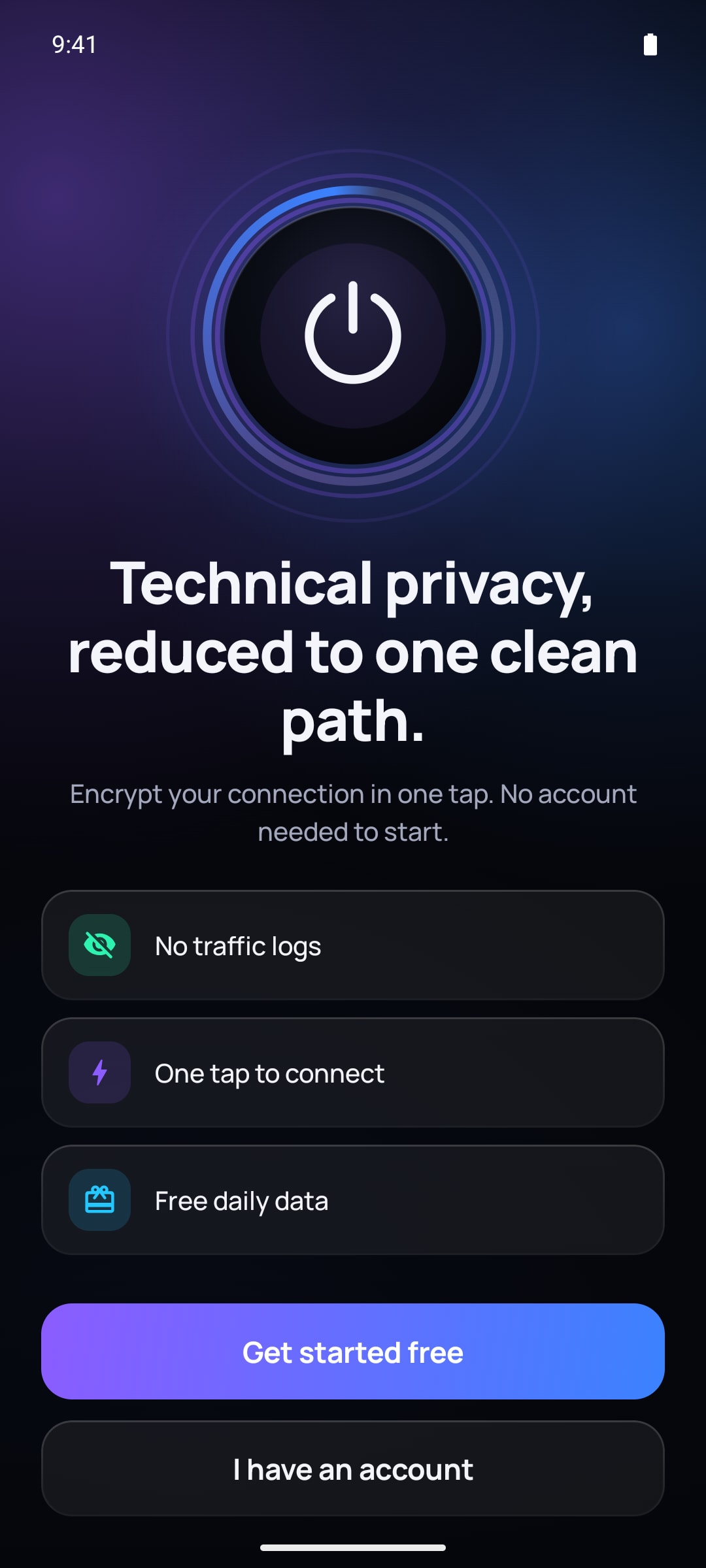
Free mode starts without an email or password: an anonymous account tied to the device, with a daily data allowance. Sign in with Google or email only to keep a plan across phones.

HQ Paphos, Cyprus · worldwide
SimpleV is a one-tap VPN for Android: no account to start, no traffic logs and a daily free data allowance, with Premium for unlimited data and every location. Behind the button sit a control plane on Railway and exit nodes on Vultr that start and stop on demand. We designed, built and run all of it ourselves.
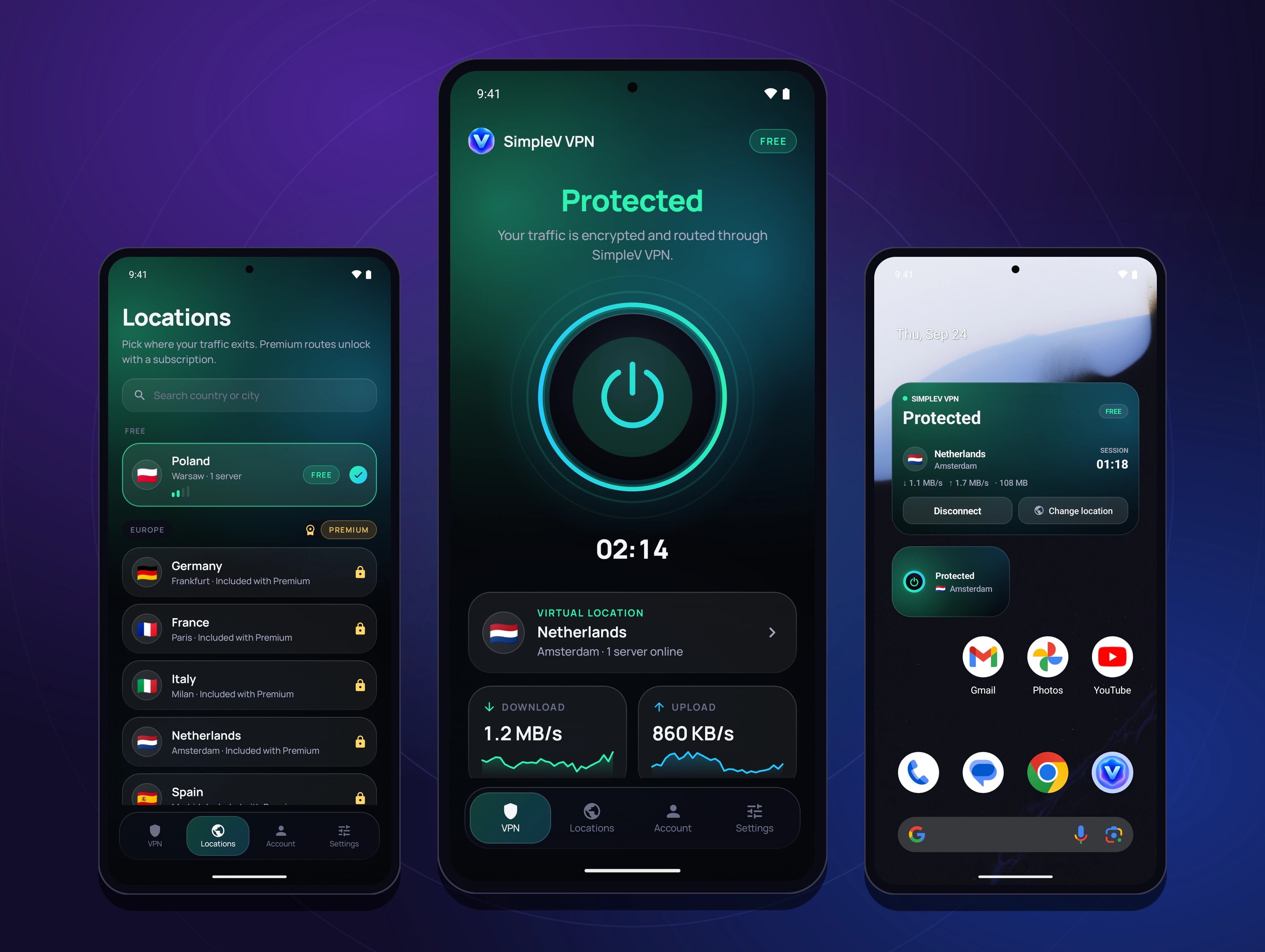

SimpleV is a Kotlin and Jetpack Compose app that tunnels over WireGuard or Xray Reality to exit nodes on Vultr, orchestrated by an Express and Postgres control plane on Railway with a 15-page admin. Active work started on 23 September 2026 and the release went live on Google Play on 5 October 2026.
On public Wi-Fi — cafes, airports, hotels, trains — people want protection without an account form. On school, office and hotel networks, plain VPN traffic is often blocked outright. We wanted one button for both cases, and a product of our own that runs real infrastructure: servers that start, scale and shut down without anyone touching them.
Free mode starts without an email or password: an anonymous account tied to the device, with a daily data allowance. Sign in with Google or email only to keep a plan across phones.
Automatic mode picks WireGuard for speed or Xray VLESS with Reality, which makes VPN traffic look like ordinary HTTPS — so it still connects on strict school, office and hotel Wi-Fi.
The app only knows the API address. Locations, nodes, promotions and paywall offers come from the backend, so most changes ship without an app release.
One team did all of it: the design, the Android app, the control plane, the admin, the node fleet, the store listing and the landing site. Nothing was handed over, because there was no one to hand it to.
A scaffold in June 2026, then one promise: tap once and you are protected. Home, locations, account, settings and the widgets in one dark-and-light visual language.
Kotlin and Jetpack Compose on Android's VpnService. WireGuard runs in its own process over AIDL; Xray runs through a libXray library we build ourselves. Glance widgets, a Quick Settings tile and Always-on VPN.
Express 5, TypeScript, Prisma and Postgres in Railway's EU West region: auth with token rotation, regions and nodes, per-device keys, the daily quota, billing and growth features.
VPN traffic never touches Railway, whose acceptable-use policy forbids proxies. Exit nodes run on Vultr servers with Xray on port 443, WireGuard and a small agent that reports to the API.
Google Play Billing verified on the server, with real-time developer notifications arriving through Pub/Sub. Google Sign-In, account deletion in the app, and push through FCM.
The Google Play listing in eight languages, then production review on 25 September 2026. The release went live on Google Play on 5 October 2026.
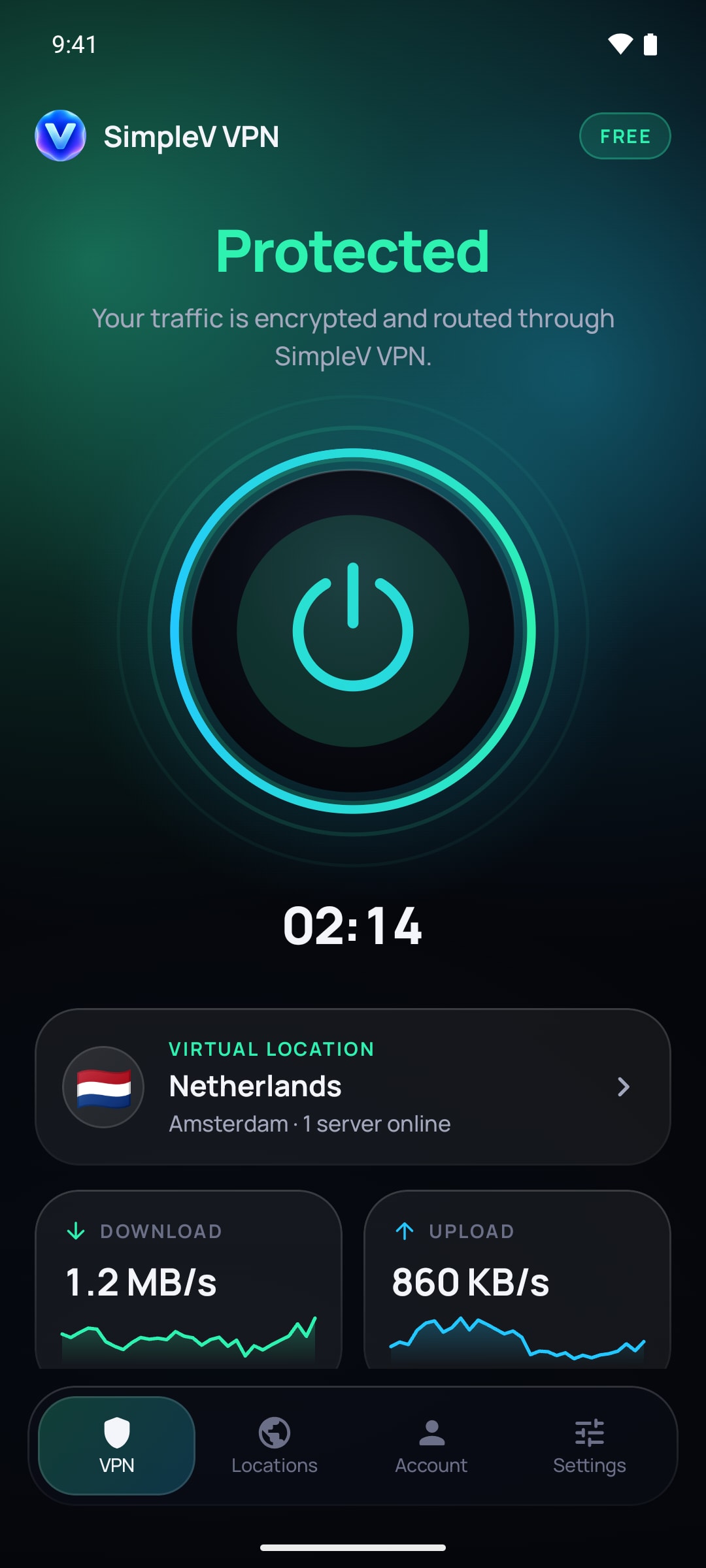
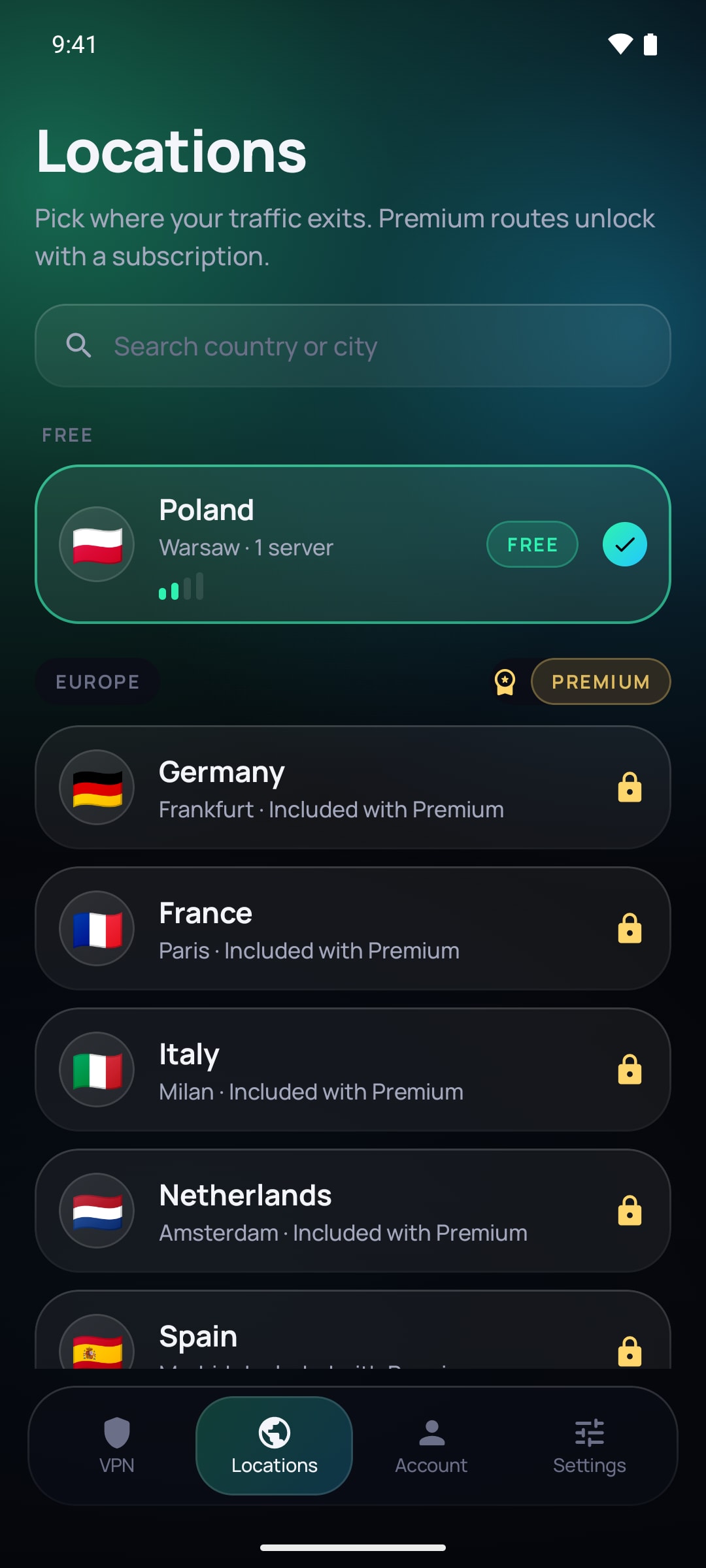
The home screen is the power button, the session timer, the location and live speed. Locations, account and settings sit one tab away, in a dark and a light theme, and the widgets connect without opening the app at all.
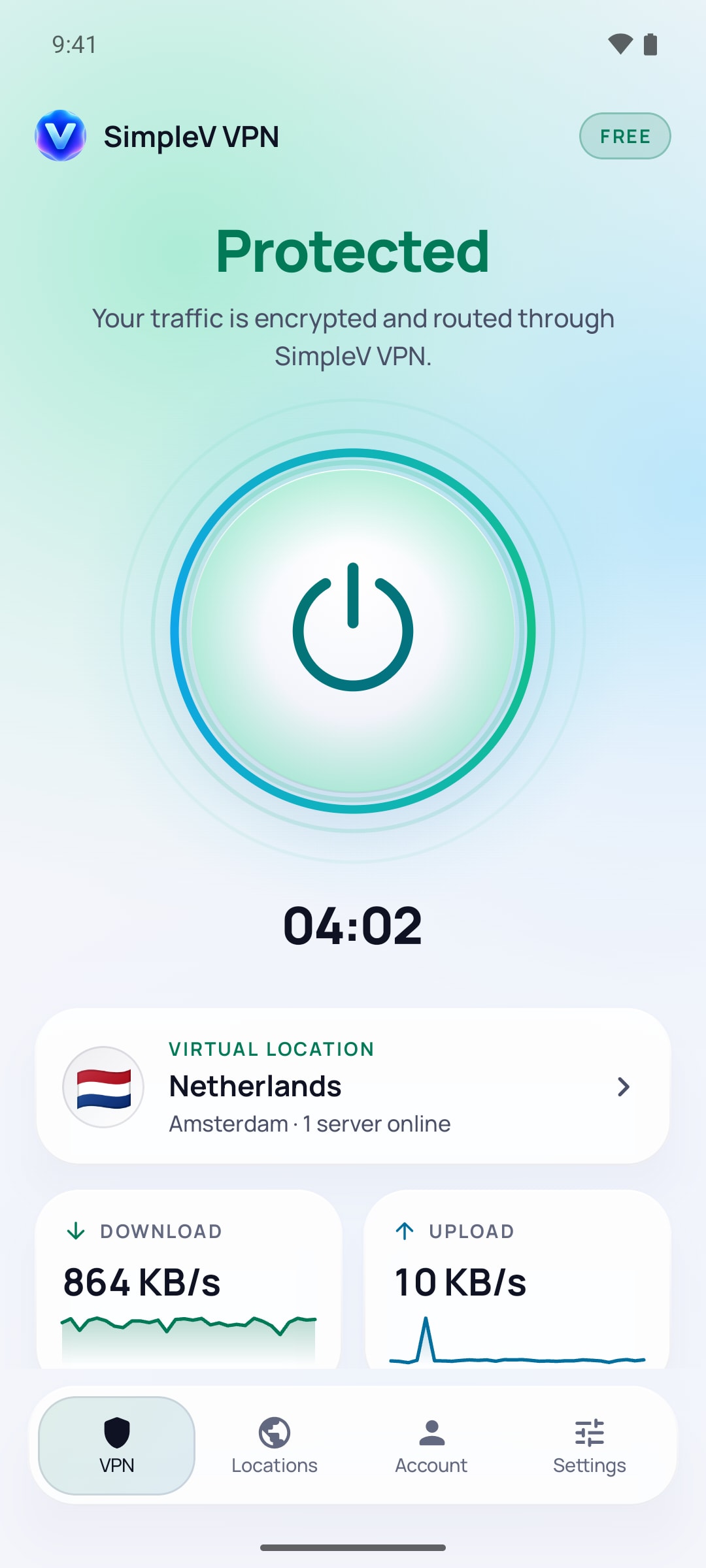
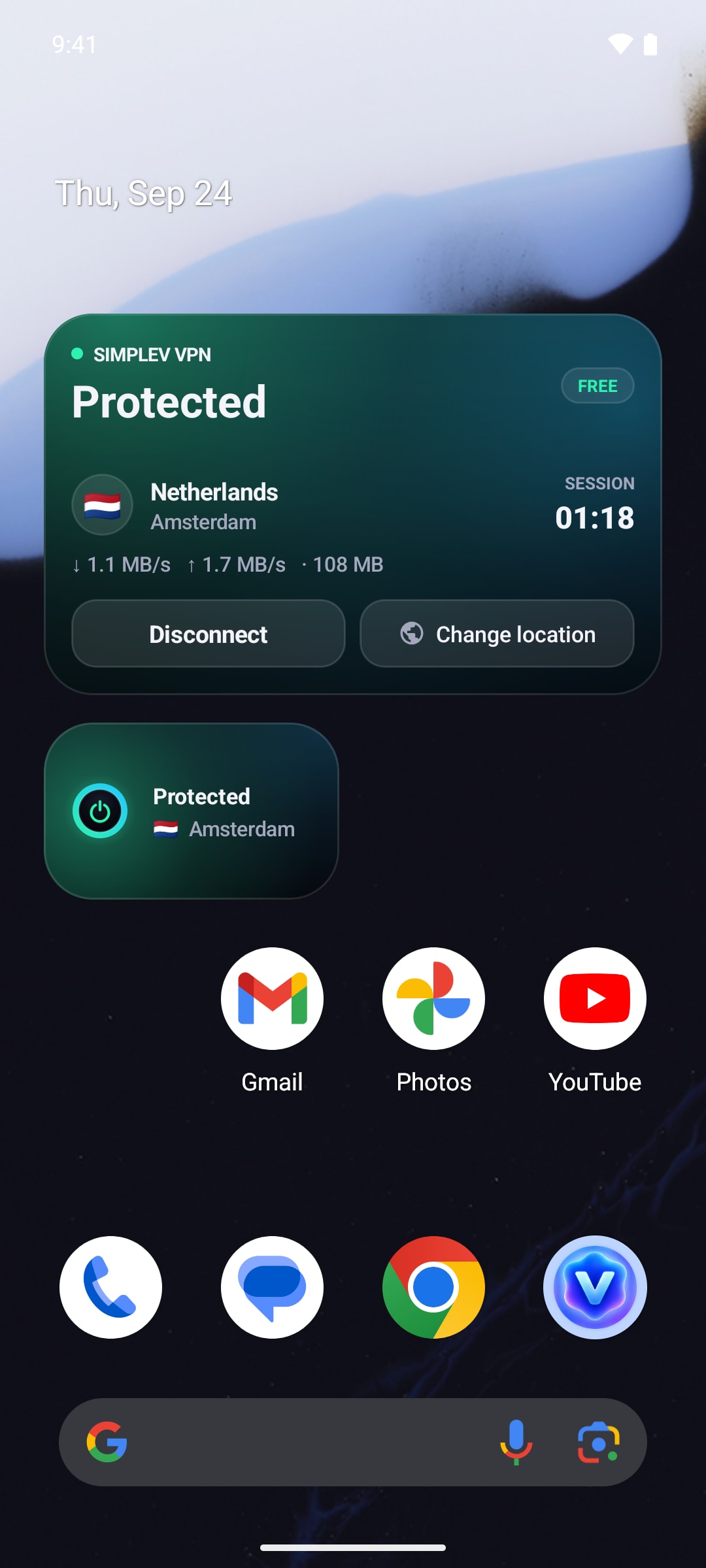
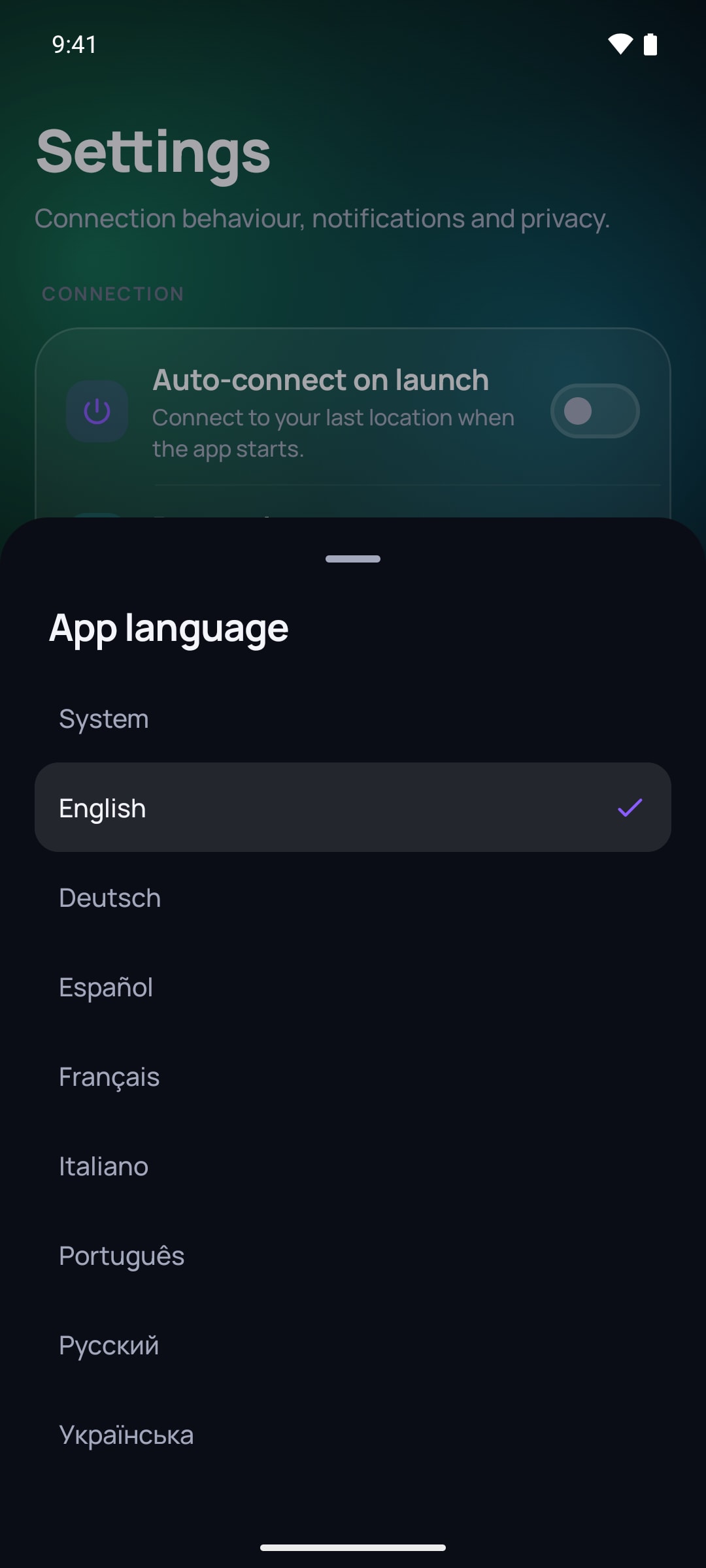
Railway runs the control plane; Vultr runs the exit nodes. The backend decides where each device connects, provisions servers when a region needs them and retires them when it does not.
POST /api/connect picks the least-loaded online node in the chosen region and returns ordered WireGuard and Xray profiles for that device.
An on-demand Premium region answers “preparing”, boots a Vultr server and lets the app poll until it is online; once idle, the node is drained and destroyed.
When a region's nodes pass 85% load, another one is added. Stale nodes are marked offline after a few minutes without a heartbeat.
Each node agent pulls its peers and posts heartbeats and usage. The backend counts that usage against the daily free allowance and stops a device that is out of data.
A React and Vite app with an Express backend-for-frontend that keeps the API tokens on the server, never in the browser. Day-to-day running of the product happens here, not in a database console.
None of these appear in a design file or a debug build. They surfaced in release builds, in Google Play review and in the billing flow, and each one is the kind of problem we now plan for in client apps.
Google Play blocks a production release unless native libraries are aligned to 16 KB memory pages. It took a newer WireGuard tunnel library and a check of every .so file before each release.
In the release build, R8 merged two near-identical Glance widget classes, so the large widget rendered the small layout. Explicit keep rules fixed it — a bug that never shows in a debug build.
Sign-in worked in testing and failed from Google Play. Play re-signs the app, so the OAuth client needed the SHA-1 from an APK Play actually delivered, not the first certificate the console shows.
Premium covers up to five devices and Free one. A new install takes over the slot of a device that has had no traffic for 10 minutes, so a reinstall never locks anyone out.
A Google Play purchase already bound to another account is refused, so one subscription cannot be shared by signing in somewhere else.
Bonus data, invite referrals and /go/ link campaigns with Play install-referrer attribution, plus banners and paywall offers that the backend can change at any time.
The product site is static HTML from a dependency-free Node server on Railway, in the same eight languages as the app. It also carries the /go/ links that the growth campaigns use.
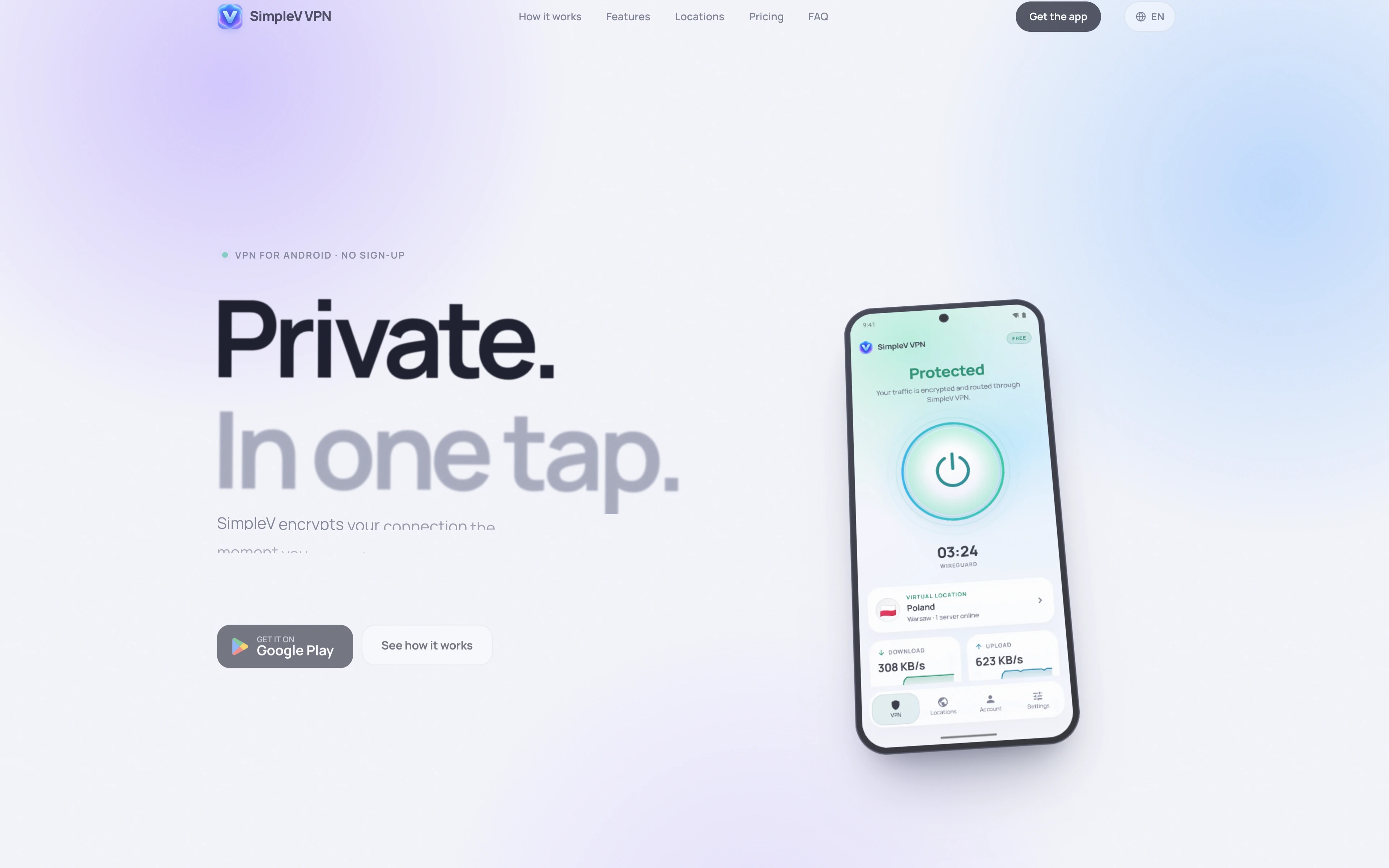
SimpleV is free on Google Play with a daily data allowance. Premium costs €4.99 a month, €34.99 a year with a free trial, or €1.99 for a 7-day pass, and covers up to 5 devices (EU prices).
~2
Active work ran from 23 September 2026; production review was submitted on 25 September and the release went live on 5 October 2026.
33
On six continents, one of them free. Some Premium regions start on demand instead of running all the time.
8
English, German, Spanish, French, Italian, Portuguese, Russian and Ukrainian — in the app, on the site and in the store listing.
Bringing your idea to life as a mobile app MVP is no small task. Launching quickly while delivering a seamless user experience is crucial to validating your concept and securing early traction.
Need an Android app with a real backend behind it?
We design and build the app, the backend, the admin and the infrastructure, take it through Google Play review and stay with it after launch — the same way we run our own.
Yes. The same team designs and builds native Android apps in Kotlin and Jetpack Compose, the backend and admin behind them, subscriptions through Google Play Billing, and takes them through Google Play review. See Android app development and MVP development.