








 By Alexander Vinokurov
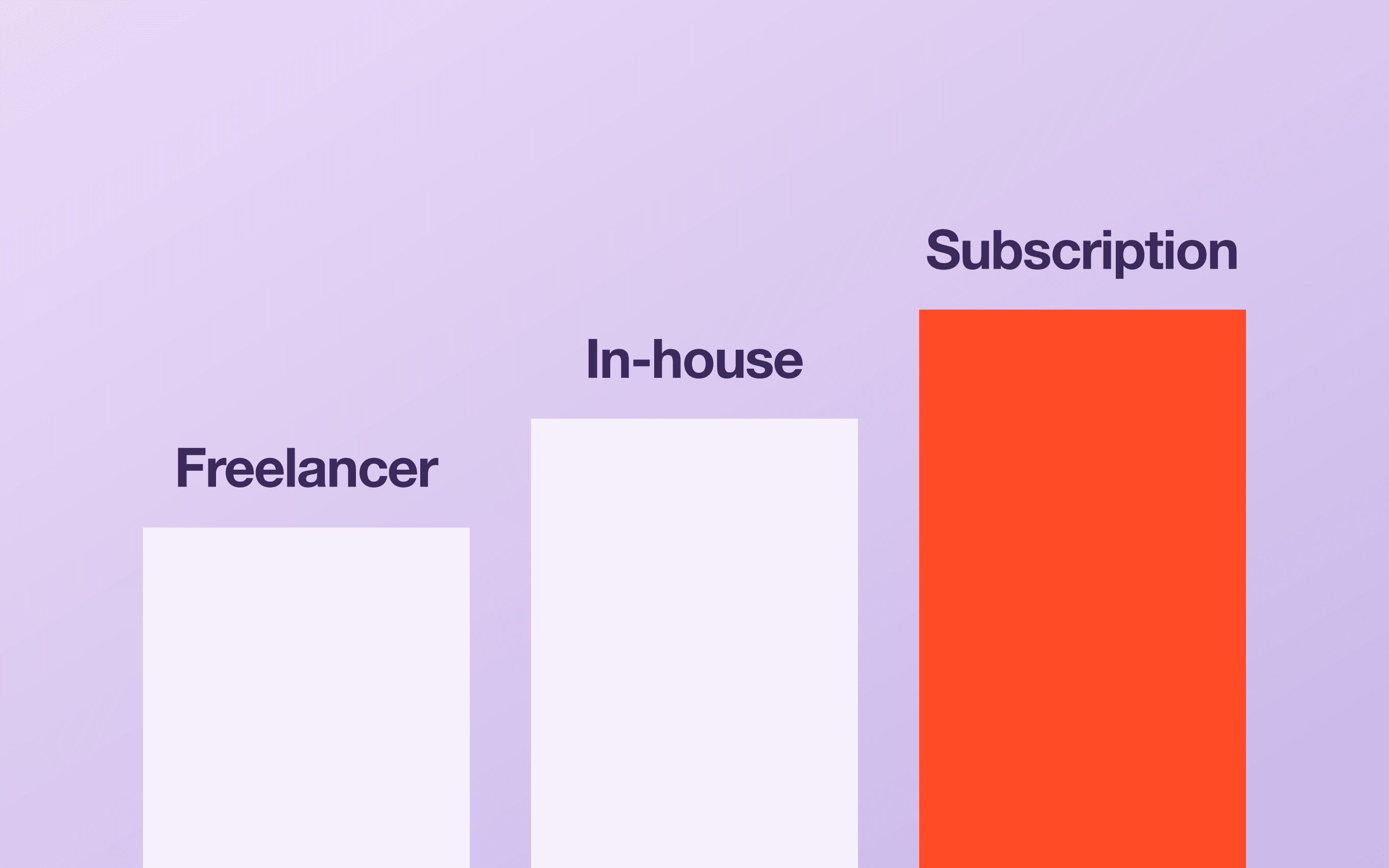
Most founders start the design question in the wrong place: they compare providers. Which subscription, which freelancer, which candidate. The decision that matters more comes first: which engagement format fits the work you actually have. A design subscription, a freelancer and an in-house designer are three different purchases. Each one is the cheapest option for one kind of workload and the most expensive for another.
This guide is about that first decision. It does not rank subscriptions by price — that table lives in Design Subscription Pricing in 2026 — and it does not walk through choosing a subscription for an MVP, which is covered in how to choose a design subscription for your MVP. Here the question is whether you should be buying a subscription at all.
Start with the workload, not the provider
Write down what you need designed in the next month, then look at its shape. Almost every startup workload falls into one of three scenarios, and each one points to a different format.
- A one-off task: a pitch deck, a logo refresh, a single landing page, a set of App Store screenshots. The scope fits in one brief, there is a clear 'done', and nothing follows straight after it.
- A product launch: an MVP, a new product line or a site rebuild. Several weeks of connected work — flows, screens, a marketing site, launch assets — where each decision depends on the last one, then a drop in volume after launch.
- An ongoing stream of requests: new features, landing pages for campaigns, onboarding fixes, ad creative, sales decks. Small and medium tasks that never stop arriving, at a volume that goes up and down with the roadmap.
A freelancer fits the first scenario best, a subscription fits the second and third, and an in-house designer fits the third only once the stream is large and steady enough to fill a full-time job. The rest of this guide shows why, with numbers.
Graphic production and product UX need different setups
Before the costs, separate two kinds of design work that the word 'designer' hides. Graphic and marketing production — social posts, ads, banners, decks, simple landing pages — is briefable: you can describe the output, judge it at a glance and swap the person doing it without losing much. Complex product UX — onboarding, dashboards, permissions, empty and error states, the flows behind a paywall — is not. It depends on knowing the product, the users and the decisions made last month, and a mistake shows up later as engineering rework rather than as an ugly banner.
- Production work rewards volume, speed and a low price per output. A freelancer, a junior hire or a graphics-focused subscription can all do it well, and context matters less.
- Product UX rewards continuity and seniority. Whoever does it needs to hold the product's context across weeks, so the format has to keep the same senior people on the work and keep the history in one place.
- If your workload is mostly one kind, choose the format for that kind. If it mixes both, do not let the cheap production format decide how your product UX gets done.
Three months, same workload: what each format costs
To compare like with like, take one workload: a seed-stage startup that needs about 20 hours of design a week for 12 weeks — roughly 240 hours — split between product screens for a new feature and a marketing site with a few campaign pages. The assumptions behind each row are listed under the table.
| Format | 3-month cost | When work starts | What the money buys |
|---|---|---|---|
| In-house designer (US median salary) | About $35,800 in employer cost per full quarter; about $17,900 in the first quarter if recruiting starts on day one | Around week 7 at the earliest: a median of about six weeks to fill the role, before any notice period | A full-time person — more than 240 hours — who keeps all the context, once hired and onboarded |
| Freelancer, marketplace rate | About $7,200 at $30 an hour; $4,800–$12,000 across the $20–$50 range | Days, once you find someone available | 240 billed hours; you write the briefs, manage the schedule and hold the context |
| Freelancer, senior independent | About $24,000 at $100 an hour (our assumption, see below) | Days to weeks, depending on their calendar | 240 senior hours; the context stays with one person who may not be free next quarter |
| Design subscription, product tier | $8,700 on the 99 Francs App / Product plan ($2,900/mo for three months) | Most first deliveries within 1–2 days after scope is clear | Two parallel requests with a UX and UI team, daily updates; no hours sold, no recruiting, pause or cancel between months |
| Design subscription, single-request tier | $3,897 on the 99 Francs Landing / Website plan ($1,299/mo for three months) | Most first deliveries within 1–2 days after scope is clear | One request at a time with one senior designer, updates every 2 days, copywriting included |
Assumptions. In-house: the US median wage for web and digital interface designers was $98,090 in May 2024, according to the US Bureau of Labor Statistics. For full-time private-industry workers, benefits made up 31.5% of employer compensation costs in June 2026 (BLS Employer Costs for Employee Compensation), so each $1 of salary costs about $1.46 — roughly $11,900 a month. SHRM's recruiting benchmarks put the median time to fill a non-executive role at roughly six weeks. Recruiter fees, equipment, software seats and the founder hours spent interviewing are left out, so the real figure is higher. Freelancer: Upwork lists a $20–$50 hourly range for product designers, with a $30 median. The $100 senior rate is our own assumption for an experienced independent product designer outside the marketplaces, not a published benchmark. Subscription: our published plan prices on the design subscription page, checked 19 October 2026.
Read the table carefully, because the numbers are not equivalent units. A salary buys a full-time person, so if the workload really is 40 hours a week, the in-house hour is cheaper than any other. A freelancer bills hours, so the cost tracks the volume exactly. A subscription does not sell hours: it sells a queue with a fixed number of active requests, so the cost stays flat however much the volume moves inside the month. The fair comparison is cost against the shape of your workload, which is the next section.
Who manages the work, holds the context and owns the files
Price is the visible cost. The hidden one is who does the coordinating. These are the questions that decide how much of your own week a format takes.
| Question | Freelancer | Design subscription | In-house designer |
|---|---|---|---|
| Who writes the briefs and sets priorities | You, for every task, often with a new estimate each time | You set the order of a shared queue; the team helps turn rough requests into scoped work | You at first; later a design lead, if you hire one |
| Who holds product context | One person, between their other clients | The team on your account, with the history in one board and one file set | The employee, fully — and it leaves with them |
| What happens when they are away | Work stops; there is no backup | Usually covered by the provider's team; check this on single-designer plans | Work stops for holidays and sick days |
| Who owns the files | Agree it in the contract: source files, not only exports | Agree it before you sign: Figma project and any code, on cancellation | The company, by default under an employment contract |
| Handoff to developers | Depends on the person; often Figma only | Depends on the plan; some include a design-plus-code option | Built into the team's routine once it exists |
On our subscription, requests sit in a private Trello or Slack workflow: you add cards, attach references and reorder the queue, and we work from the top. Whichever format you choose, get file ownership in writing before the first invoice. It is the clause founders most often discover too late.
What a month of design subscription realistically delivers
'Unlimited requests' does not mean unlimited output. Throughput is set by how many requests are active at once and how quickly feedback comes back. A realistic month looks like this.
- Single-request plan: one piece of work moves at a time, in reviewable steps every couple of days. That suits a marketing site built page by page, a landing page followed by its campaign variants, or a deck followed by a one-pager. It does not suit a product that needs UX flows and visual UI moving together.
- Two-request plan: one request can carry the product flow while the other carries the interface, the marketing page or launch assets. This is the minimum for a product launch, because structure and visuals stop waiting on each other.
- Large pieces are split. A full product flow, a whole site or a brand system arrives in batches you review, not in one drop at the end of the month.
- Your feedback speed caps the pace. A team updating daily cannot move faster than the founder reviewing weekly; the formats that suit founders who reply fast are the ones with the shortest loops.
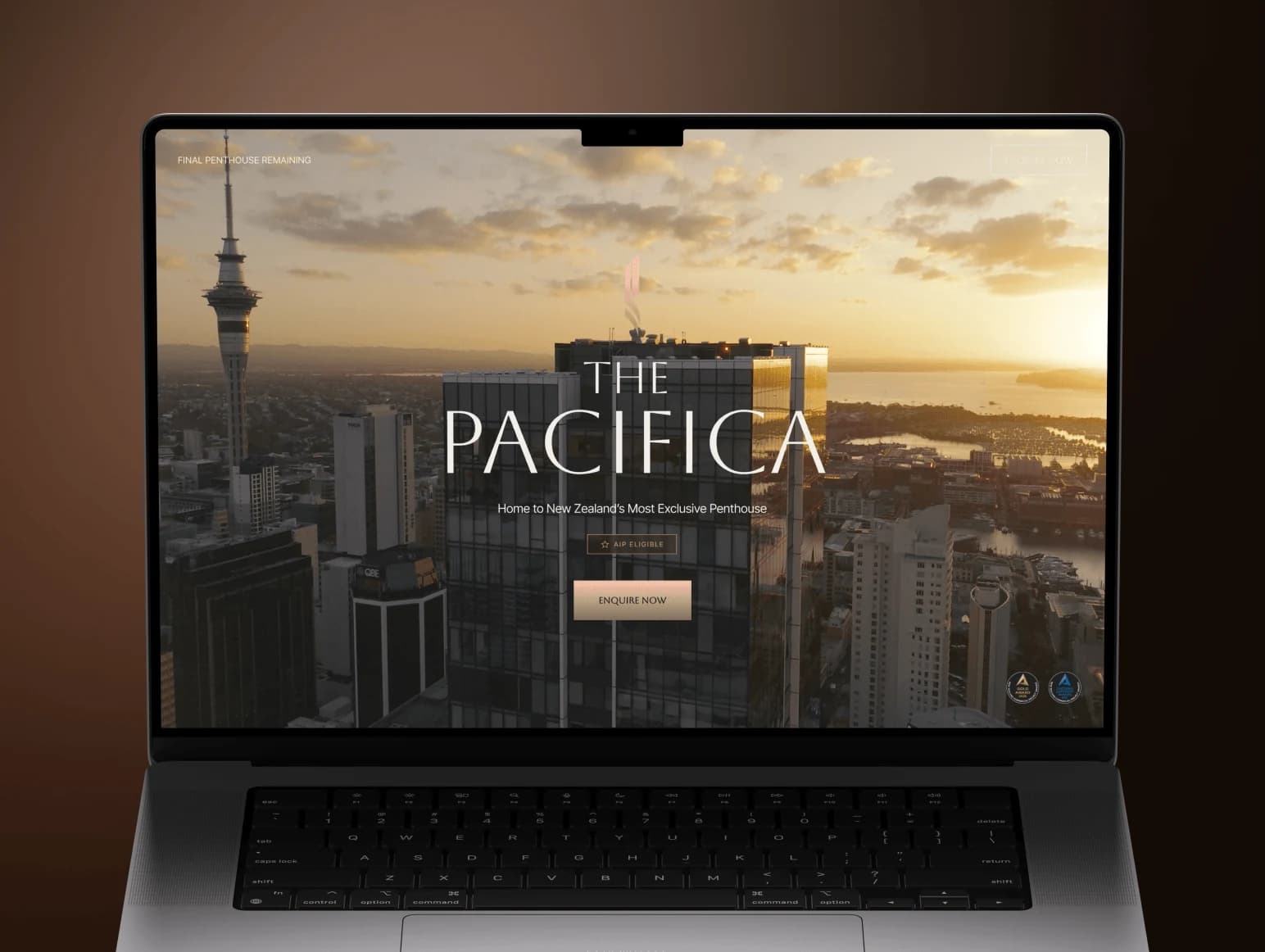
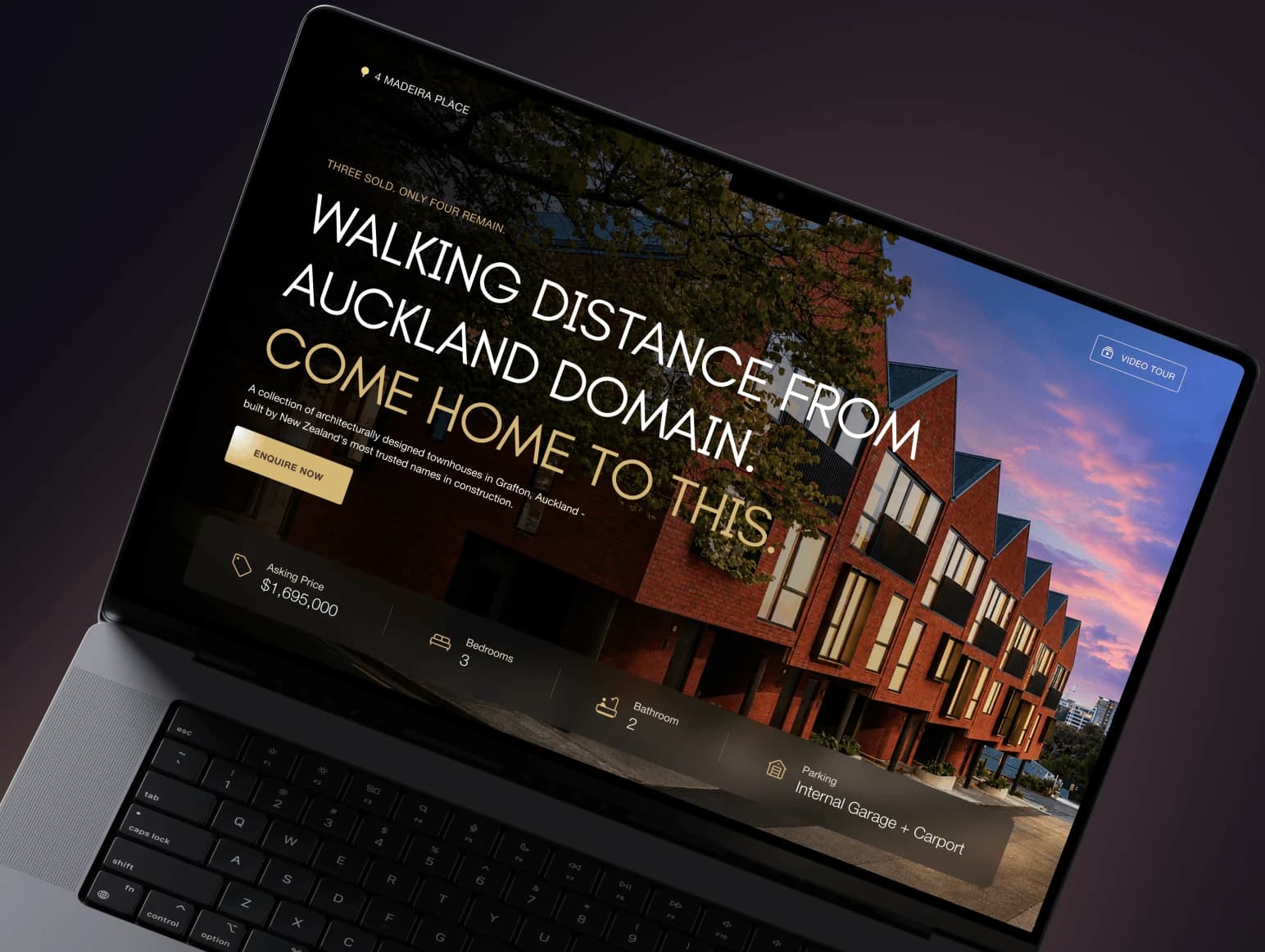
One concrete reference from our own work: the 4 Madeira Place property website was designed and built in Webflow in two weeks as part of a design subscription. That is the scale of a well-scoped marketing site inside a month, not a promise that any site will take the same time.
When a freelancer is the better call
- The work is a single, well-defined asset and you can write the brief yourself.
- You need a narrow specialist skill — 3D, motion, illustration, a specific type of data visualisation — for a short period.
- Your budget is under the price of one subscription month and the task genuinely fits in a few days.
- You already have a designer or design lead who can brief and review the freelancer's work.
When an in-house hire is the better call
- Design is part of the product every day, not a series of projects, and there is enough of it to fill a full-time role for the next year.
- The product is complex enough that deep domain knowledge compounds — regulated workflows, expert users, a design system many engineers depend on.
- You can afford the time to hire and a founder or lead who will manage, review and grow the designer.
- You are past the point where pausing design would ever make sense.
Many startups get there in sequence: freelancers for early one-off tasks, a subscription through the launch and the first months of iteration, then a first in-house hire once the work is steady — often with the subscription kept for overflow, or paused.
Choose this if…
- Choose a freelancer if the task is one-off, the brief fits on a page, and you have time to manage it yourself.
- Choose a design subscription if you have a launch or a stream of requests over the next few months, the volume rises and falls, and you want senior work without recruiting — especially if it mixes product UX with marketing pages.
- Choose an in-house designer if there is full-time product design work for the foreseeable future, you can wait about two months for them to start, and someone will lead them.
- Choose a fixed-price project instead of any of these if the work is a single scoped build with a clear end — that is how our MVP development runs, priced per phase rather than per month.
- Choose by your riskiest work, not your cheapest: if product UX is on the line, do not let a graphics-production budget set the format.
If you have narrowed it to a subscription
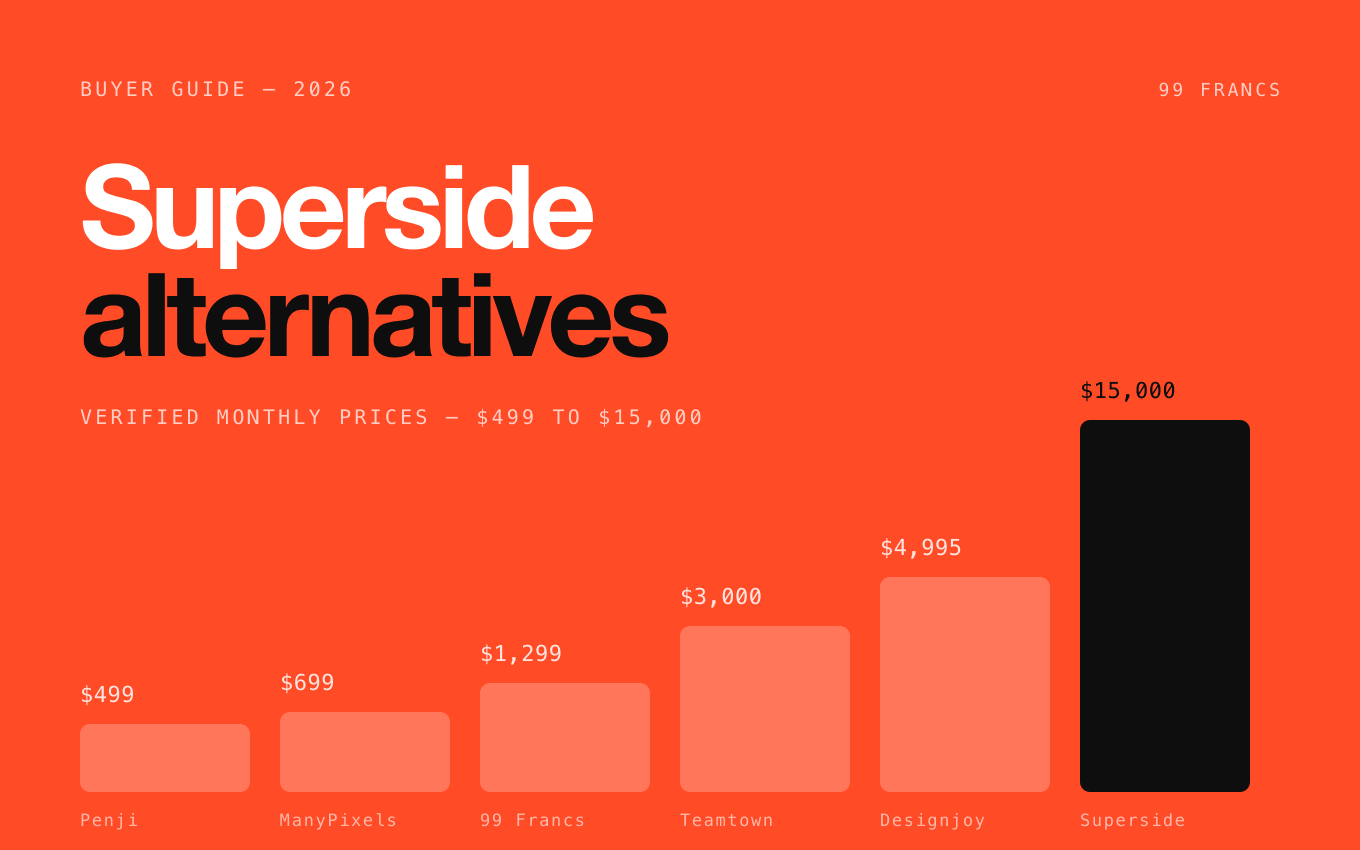
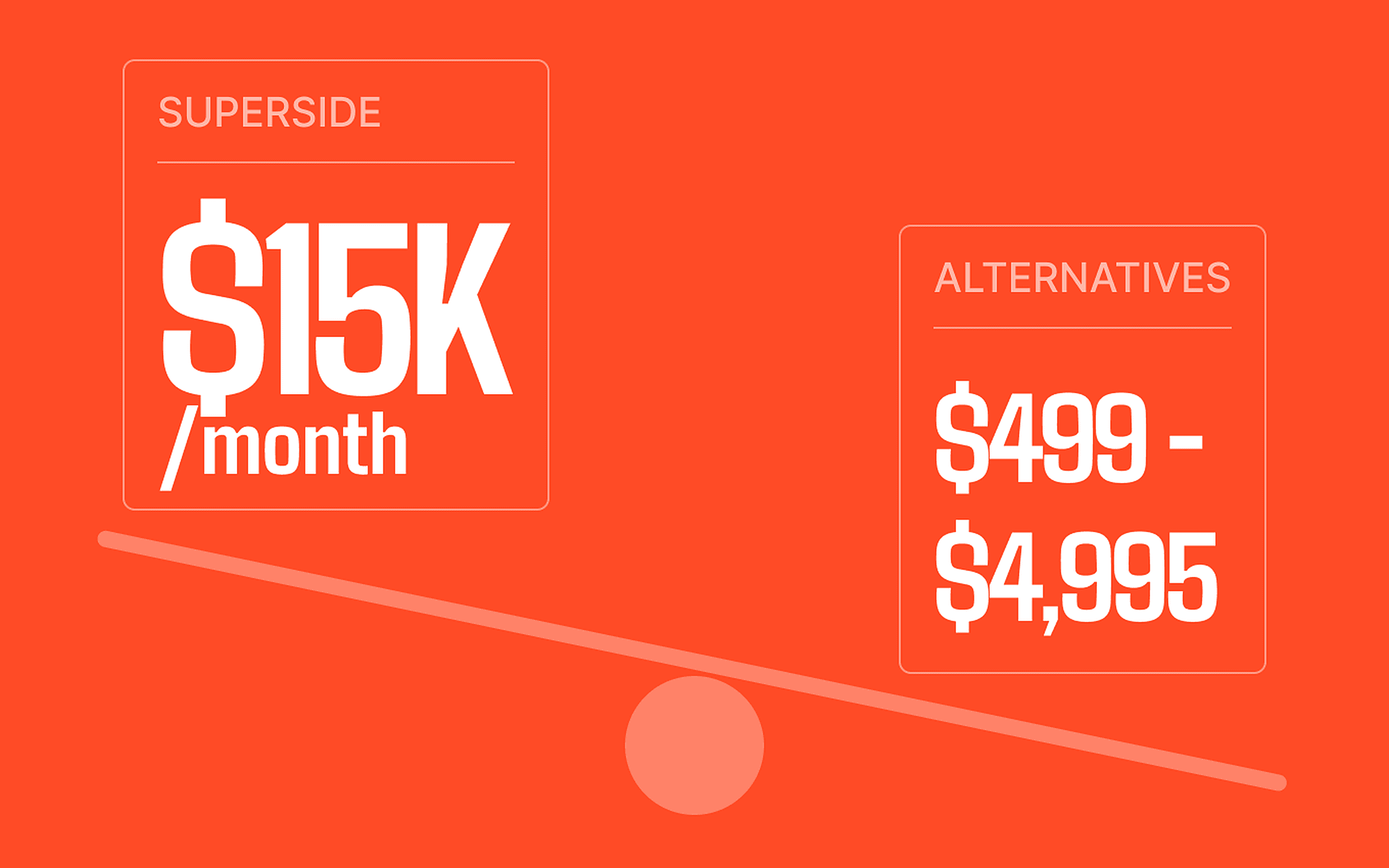
Then the provider question becomes useful. Compare published plans in the design subscription pricing guide, use the scorecard in how to choose a design subscription for your MVP, and if you are weighing the best-known names, see Superside alternatives and DesignJoy alternatives for startups. For product-heavy work, our product design page shows what the UX side looks like in practice.
Frequently asked questions.
Not sure which format fits your next month?
Send us the list of design tasks you expect next month. We will tell you whether it fits a freelancer, a subscription plan or a hire — and if it is a subscription, which plan.