









 By Alexander Vinokurov
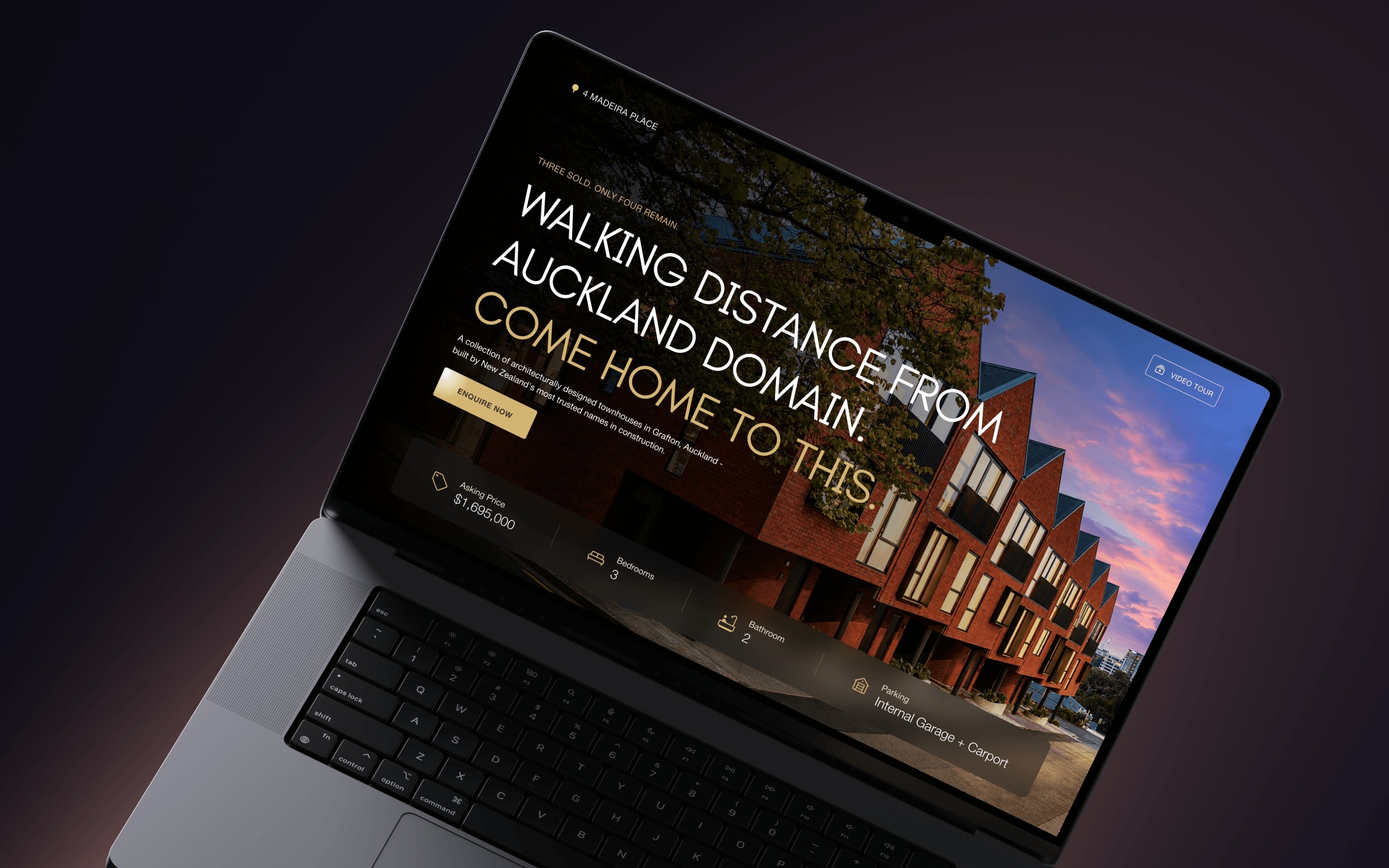
A property development website is not a normal company website. It has a launch date set by the sales campaign, it carries paid traffic for a few months, it has to sell homes that may not be built yet, and it changes as stages sell. So the useful budget question is not "how much is a website?" but "what do we need live on launch day, and what can wait for the next sales stage?" This guide answers that phase by phase, using launch sites we have shipped in Auckland.
Campaign landing page or full development website?
Most of the budget is decided by this one choice. A landing page is faster and cheaper, but every home, plan and price lives on one page. A full site gives each home or floor its own space, lets the sales team edit availability in a CMS, and grows with the project. Pick by the number of homes, the length of the campaign and who will update the site.
| Launch scope | Campaign landing page | Full development website |
|---|---|---|
| Best for | A small release, one building or a deadline offer | A multi-stage development sold over months |
| Typical content | Hero, location, homes grid, floor plans, amenities, one enquiry form | Home or floor pages, galleries, floor plans, location, agents, enquiry flow per home |
| Who updates it | Values in the page, updated on request as homes sell | The sales team, through CMS fields for homes, prices, availability and agents |
| Typical build time with us | About a week | 3–6 weeks |
| 99 Francs price | From NZ$2,000 | NZ$8–15K |
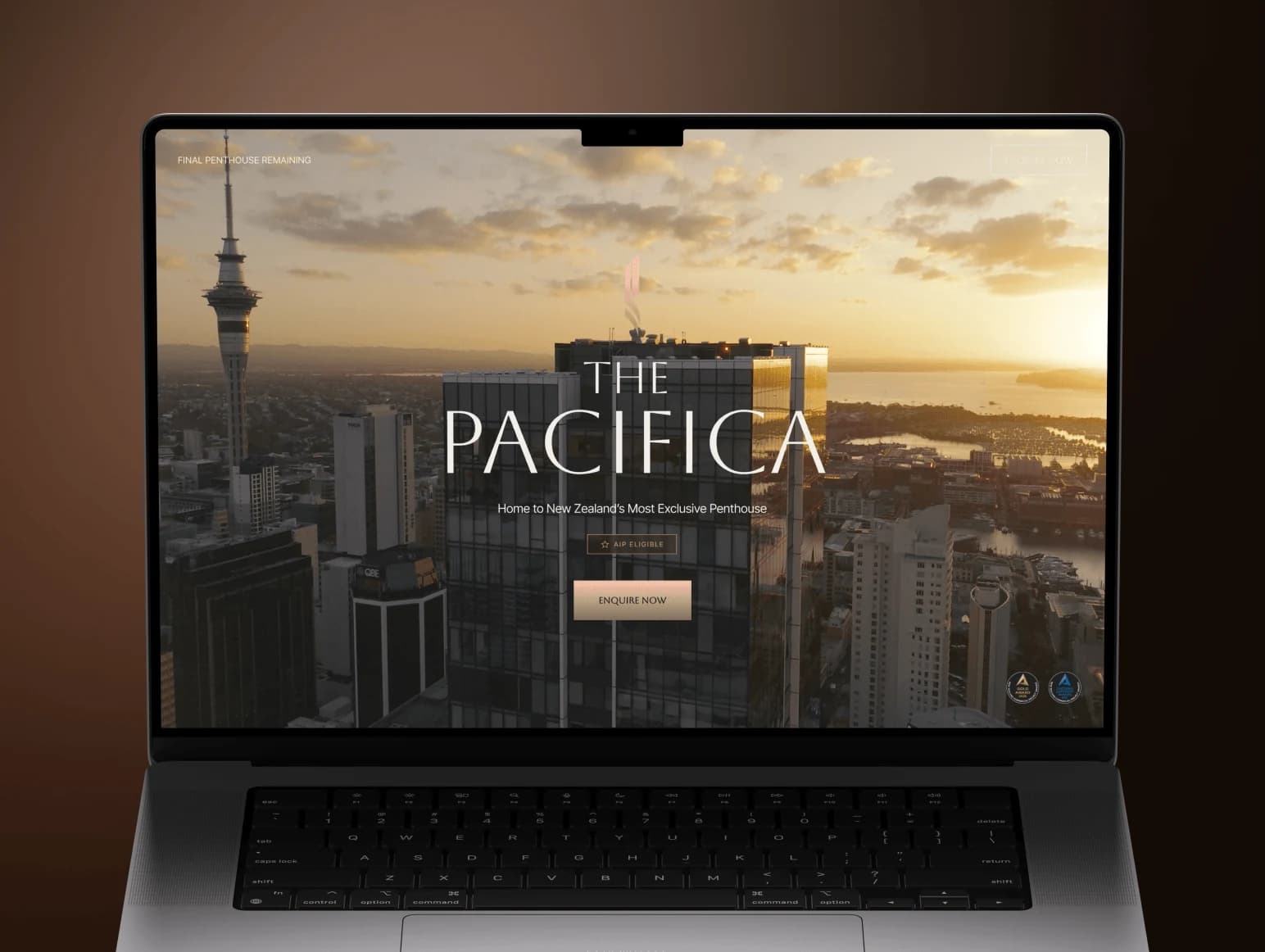
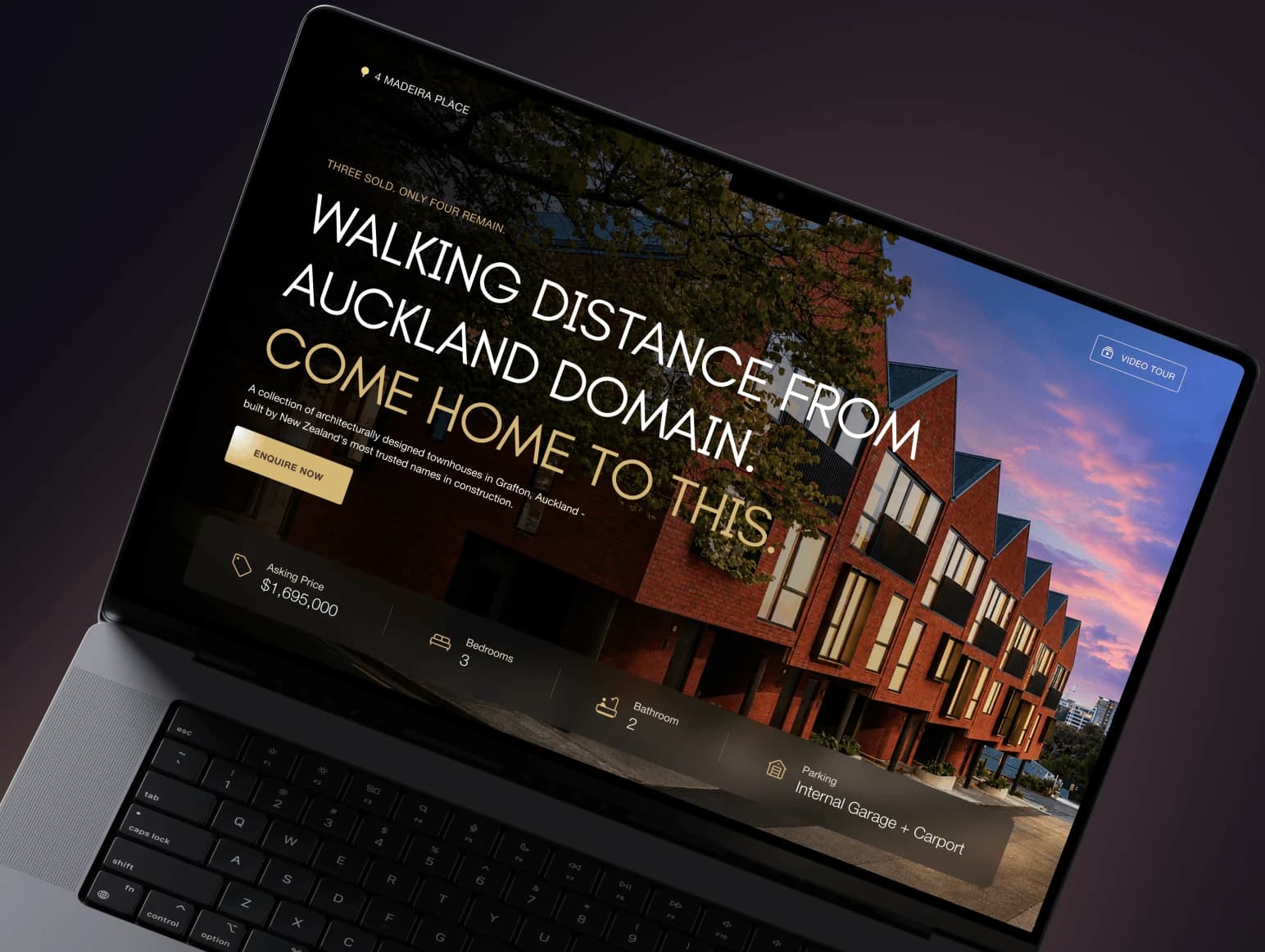
| Example | Vines Estate, Swanson | 4 Madeira Place, Grafton; The Pacifica Penthouse, Auckland CBD |
Both prices are final: we are based overseas, so no 15% GST is added on top. For how these figures compare with the wider New Zealand market, including yearly hosting and maintenance, see our guide to website development costs in New Zealand.
What drives the cost of a property development website
Two developments with the same number of pages can be quoted very differently. These are the lines that move a property website quote, roughly in order of how much they add:
- Number of homes and how they are shown: ten homes in one availability grid is far less work than a page per home with its own gallery, plans and enquiry button.
- Home and listing CMS: if the sales team will mark homes as sold, change prices or swap agents themselves, those need to be CMS fields rather than text in a layout.
- Floor plans: one PDF per home is simple; interactive floor-by-floor layouts, plan switchers or zoomable plans are design and build time.
- Enquiry routing: one inbox is simple; routing enquiries to different agents, pre-selecting the home a buyer came from, or sending leads into a CRM each add integration and testing.
- Sales stages: a site planned for several releases needs a structure that can add stages, sold-out states and new homes without a redesign.
- Motion and premium design: scroll-driven animation that walks a buyer through the building is a real line item, and has to stay fast on phones.
- Content you do not have yet: renders, photography, floor plans and copy that arrive late cost time, and on an hourly model they cost money too.
Budget lines that sit outside the website quote
A web quote covers design and build. Several costs of a launch site usually come from other suppliers, and they are the ones developers most often forget to budget for:
| Budget line | Usually supplied by | Why it matters for the website |
|---|---|---|
| Architectural renders and walkthroughs | Your architect or a render studio | Off the plan, renders do the job photography of a finished home normally does |
| Location and lifestyle photography | A photographer or a stock library | Sells the neighbourhood, which buyers weigh as much as the home |
| Floor plans and home schedule | Architect and sales team | Plans, sizes and the list of homes drive the whole page structure |
| Copy and pricing signals | Your marketing team or agency | Agreed wording avoids late rounds of legal and sales approvals |
| Hosting and platform plan | Webflow, or your WordPress host | A running cost for as long as the campaign is live |
| Paid media | Your media buyer or agency | The site has to be live and tested before the first ad runs |
On Webflow, the CMS site plan a listings site needs was US$25 a month billed yearly when we checked Webflow's pricing page on 26 September 2026, with hosting included. On WordPress the software is free but hosting and plugin maintenance are ongoing. Our WordPress vs Webflow guide for property developers compares the two for a launch.
A realistic launch timeline, phase by phase
We plan a launch backwards from the campaign date: first ads, agent launch, open homes. Each phase has a fixed scope and NZD price agreed before it starts, and you pay at the end of the phase once you have seen it working. There is no deposit, and regular clients can pay once at the end of the whole project.
| Phase | What it delivers | Typical time |
|---|---|---|
| 1. Brief and structure | The development story, location advantages, home or floor layout and the path to enquiry | A short call, or a few emails if that suits you better. Either way it is quick |
| 2. Design | Editorial design of the key pages on desktop and mobile, approved before any build | A concept in 5 working days |
| 3. Build and CMS | Webflow or WordPress build, homes in the CMS, galleries and floor plans | Most of the 3–6 weeks |
| 4. Enquiry flow and QA | Forms tested end to end on real phones, spam protection, email delivery, analytics | Before the first ad runs |
| 5. Sales-stage updates | Sold states, new releases, open-home dates, new pages as stages launch | As stages launch, scoped per phase |
In practice: 4 Madeira Place, a townhouse development in Grafton, went live in two weeks; The Pacifica Penthouse, a 54th-floor residence in Auckland CBD, went live in four. Both were delivered on a fixed deadline in collaboration with an agency partner, as Webflow builds the marketing team edits in the CMS. Most property websites take three to six weeks, depending on the number of homes, galleries and integrations; a campaign landing takes about a week.
If you want to see the direction before committing to a full site, phase 1 can be a design concept on its own: the homepage or landing page designed for desktop and mobile, ready in 5 working days, for NZ$700 flat, paid only if you like it.
How to prepare so assets do not delay the launch
The build is rarely what makes a property launch late. Content is: renders still in revision, floor plans awaiting council changes, copy waiting on sign-off. Have these ready, or at least dated, before phase 1 starts:
- A fixed launch date and the channels that depend on it: ads, agent launch, open homes, signage.
- The home schedule: every home or apartment with its type, size, level and status, even if prices come later.
- Floor plans in their final or near-final form, one file per home type.
- Renders and photography, with a note on which are final and which are placeholders.
- Who receives enquiries: one inbox, several agents, or a CRM, and who tests that leads arrive.
- Who approves copy and pricing wording, and how long their sign-off takes.
- Who on your team will update homes, prices and availability after launch.
Placeholders are fine if they are agreed. We can design around a render that is still in revision and swap it before launch; what costs time is discovering in week three that the home list or the enquiry routing has changed.
Test the enquiry flow like it is the whole budget
On a launch site every lost enquiry is a lost buyer, and form failures are often silent. On the Vines Estate campaign landing, the custom form relayed into the WordPress forms plugin the client already used, and two of that plugin's anti-spam checks returned a success message while discarding the submission. We found the cause and fixed it. On Trivelle Gardens, a live development site, we found the enquiry form rejecting every submission. Budget time for end-to-end form tests before launch and after every update.
When to add pages: one phase per sales stage
You do not need to build the whole project's website before stage one goes on sale. Launch with what stage one needs, then add a phase when the sales story changes:
- Launch: the development, location, the homes on sale, floor plans and the enquiry flow.
- As homes sell: update statuses and the availability grid; on a CMS this is the sales team's job, not a new phase.
- Next release: add the new stage's homes, plans and imagery as a scoped phase, reusing the existing templates.
- Construction progress: a progress page or gallery keeps off-the-plan buyers engaged until completion.
- Completion: replace renders with photography of the finished homes, and add an open-home or show-home page.
For a short promotion, a CMS layer can be more than you need. Vines Estate ran a fixed-length Buy a home, Win it back offer for a ten-home development in Swanson; statuses and the countdown were values in the page, updated as the client reported sales, which was faster and safer than building a CMS that would be thrown away when the promotion ended. All ten homes in the campaign sold.
Our numbers, in one place
- Campaign landing page: from NZ$2,000, about a week to build.
- Full property development website: NZ$8–15K, typically three to six weeks.
- Design concept on its own: NZ$700 flat, 5 working days, paid only if you like it.
- Support rounds on a live site: NZ$45 an hour, flat, no GST added, paid after the work.
- No GST added, no deposit, and payment at the end of each phase once it works.
More on how we work with developers is on our page for property development websites in Auckland and New Zealand, and the wider offer is on web development for New Zealand. Send the development, the number of homes and the launch date, and we will reply with a scoped estimate per phase.
Frequently asked questions.
Planning a development launch?
Send the development, the number of homes and the launch date. We will split the work into phases and reply with a scoped NZD estimate per phase — no deposit, no GST added.