 New Zealand
 Norway
 Malta
 UAE




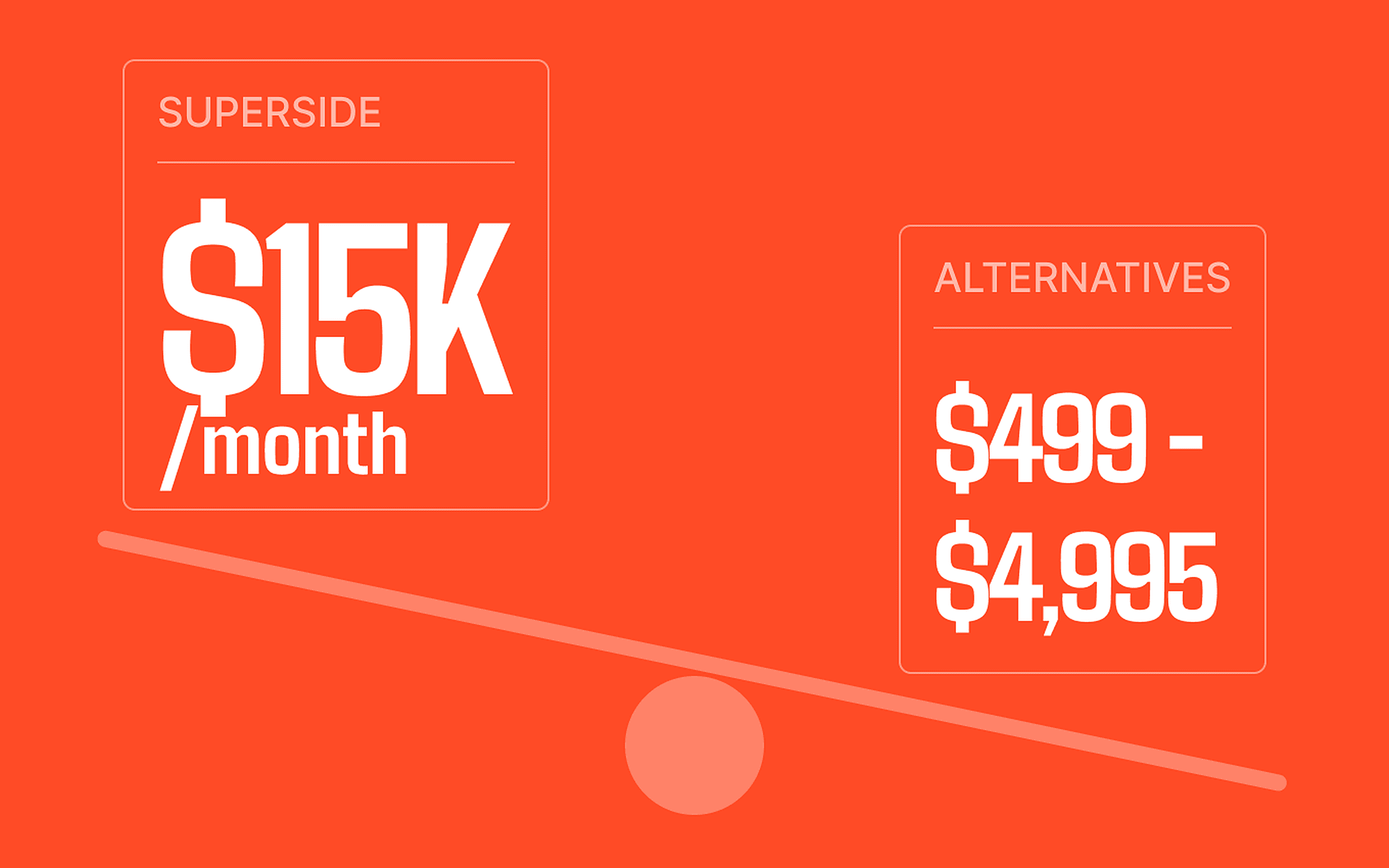



The best Altar.io alternative for a first MVP on a startup budget is 99 Francs (the studio that publishes this guide): MVPs from US$5,000 in fixed-price phases, a tightly scoped first release in 2–3 weeks, no deposit and no upfront payment, and the code is yours. For a fixed budget with no advance payment above US$20,000, look at Upsilon; for guarantees in writing, Designli; for a larger European team, Uptech or Netguru; for no-code, LowCode Agency.
Altar.io is a serious product studio, and its habit of scoping a product before building it is the right one. Founders look for alternatives for a few plain reasons: the budget is below its example projects, they want a published price or payment schedule before the first call, they would rather not buy a separate scope phase, or they need a first version in weeks. This guide starts with what Altar.io actually offers, then sorts seven alternatives by those reasons.
Disclosure: 99 Francs (that's us) is one of the seven alternatives and is listed first. Every fact about Altar.io and the other agencies comes from their own websites, checked on 25 November 2026. Prices appear only where the agency publishes them, and no agency paid to be included or for its position.
What Altar.io offers, as of November 2026
Altar.io is a custom product and software development company with its headquarters in Lisbon. Its services are Product Scope, an MVP Builder, custom software development, AI development, UX/UI design and dedicated teams, and it says it has delivered over 80 successful projects. The work shown on its site leans towards fintech and regtech (Apiax, Synch, Synapse, Enterprise Bot), with clients in Switzerland, Italy, the UK and the US, and it states that two-thirds of its clients go on to raise venture funding.
- Process: every MVP starts with Product Scope, "a structured 15 day process to align your product vision with your business goals" (the service page says 15–20 days), run by product, UX/UI and tech architecture people rather than account managers. Then a design brief, key screens, all screens, development, and test and launch.
- Price: no list price. The pricing page has an estimator and a table of example projects: an arts marketplace in two months for €18k, a community management platform in three months for €40k, a social network mobile app in five months for €50k, a legaltech product in two months for €100k and a proptech cloud in five months for €350k. The Product Scope has no published price.
- Budget bands in its enquiry form: under 50k, 50k–150k, 150k–500k and over 500k.
- Speed-up: its Seed program, a set of ready modules such as sign-up, email and password recovery, so that a project "starts with ~50% of the code already done".
- Stack: Angular, React, Vue, Next.js and Flutter on the front end; Node.js, NestJS, Python and FastAPI behind them.
- Payment terms and code ownership: not stated on the pricing, MVP or Product Scope pages, so ask for both in writing.
Who should still pick Altar.io: a funded founder in fintech or another data-heavy field whose product needs a proper architecture phase, who has a budget in the range of those example projects, and who values a team that has built for banks and regulated companies. For that brief it is a better fit than a small studio, ours included.
Altar.io and seven alternatives compared
| Agency | Base | Best for | Published MVP price | Stated timeline | How you pay |
|---|---|---|---|---|---|
| Altar.io | Lisbon, Portugal | A structured scope phase, then a build for a funded product | No list price; example projects €18k (2 months) to €350k (5 months) | Product Scope: 15 days; example builds 2–5 months | Not stated |
| 99 Francs | Paphos, Cyprus (remote) | A first MVP from one small senior team, on a startup budget | From US$5,000; cross-platform mobile from US$8,000 | 2–3 weeks for a tightly scoped first release | Fixed-price phases, no deposit, paid at the end of each phase |
| Upsilon | Sheridan (Wyoming) and Tallinn | A fixed scope and budget, nothing paid in advance | From US$20,000; typically US$20,000–65,000 | Under 3 months | No advance payment; invoiced every two sprints |
| Designli | Greenville, South Carolina | Guarantees in writing for a first-time founder | US$10,000–50,000 (basic) to US$150,000–400,000+ (complex) | Real users by day 30, or the next month is free | First two weeks refundable; cancel on 30 days' notice |
| Uptech | Los Angeles, Tallinn, Kyiv, Gdańsk, Paphos | A European web and mobile product team | Generally US$35,000–50,000 | 4–5 months (FAQ) | Fixed price for a defined scope, or time and materials |
| thoughtbot | Not stated on its MVP page (US and UK phone lines) | A discovery sprint and a codebase your team will own | Not published | Discovery sprints in as little as 2 weeks | Not stated |
| Netguru | Poznań, Poland | Funded startups that need a large team | Not published; no figure before scoping | Set after discovery; example MVPs in 5 and 6 weeks | Fixed price or time and materials |
| LowCode Agency | Not stated on its MVP page | No-code and low-code MVPs you can edit yourself | US$15,000–30,000 (simple) to US$60,000–120,000 (complex) | 6–10 weeks for a simple MVP | Not stated on the MVP page |
Checked on 25 November 2026 on each agency's own website, in the currency it uses. "Not stated" means the MVP or pricing page does not say, not that the agency has no terms: ask before you sign.
1. 99 Francs — a first MVP from US$5,000, paid per phase (that's us)
99 Francs is a senior design and development studio based in Paphos, Cyprus, working with founders worldwide since 2017. It is founder-led: two founders plus one or two senior specialists per project, so the people who scope the product also design and build it. Where Altar.io sells scope as a separate 15-day phase, we scope as part of the first fixed-price phase: one primary user, one core action, one launch surface, plus analytics and a feedback loop. A first release cut that tightly takes two to three weeks.
- Who it fits: a founder, technical or not, who needs a working first version in front of users or investors and has a startup budget, not a scale-up one.
- Price: MVPs from US$5,000; a tight web MVP is US$5,000–8,000 and a cross-platform mobile MVP starts from US$8,000. Each phase has a fixed price agreed before it starts.
- Timeline: two to three weeks for a tightly scoped first release; a product with more surface takes more phases.
- Payment terms: no deposit and nothing upfront. You pay at the end of a phase once you have seen it working, and either side can stop between phases.
- Ownership: the code is yours. You keep the code, designs and content produced so far, whenever you stop.
- AI-built prototypes: if you already have something made with Lovable, Bolt or Cursor, we review it for free in writing within 48 hours; one fix is from US$1,000 and a full production pass US$2,000–5,000 (AI prototype to product).
The proof, in products you can open. CryptoCrush: a founder in Cape Town came with only an idea for a game, and we did the game design, native iOS and Android versions to prove the mechanics on real phones, then a Telegram Mini App with a server, leaderboard and admin panel, in about three weeks of active development. SimpleV, our own Android app, reached Google Play about two weeks after active work began. And for Digsdy, an AI real estate assistant, we did the design side only: two designers took the MVP from UX notes to finished screens in three weeks.
When 99 Francs is not the right choice: a large regulated build, such as a banking or healthcare platform that needs formal compliance work, or a product that needs ten engineers for a year. We are a small team by design; for that kind of project Altar.io itself, Netguru or Uptech are set up better. For everything smaller, scope, process and the full price list are on our MVP development page.
2. Upsilon — fixed scope and budget, no advance payment
Upsilon lists addresses in Sheridan, Wyoming and Tallinn, Estonia, and publishes what Altar.io keeps for the proposal. Discovery is a two-week package at US$6,000, prototyping is US$10,000 in under a month, and MVP development starts from US$20,000, typically US$20,000–65,000 in under three months, with a "guarantee of fixed project timelines, scope & budget". Its payment terms are on the same page: "We don't require advance payments", invoices every two sprints with 15 days to pay, and a money-back guarantee within the first sprint. It also discounts its work in exchange for equity, and you own the source code and all product assets from day one.
Best for: founders who like Altar.io's scope-first approach but want the price of every stage, and the payment schedule, in public.
3. Designli — guarantees written into the terms
Designli, in Greenville, South Carolina, builds web app MVPs, native or cross-platform mobile apps and progressive web apps. Instead of a scope phase it commits to a date: "If V1 isn't in real users' hands by Day 30, your next month is on us". The first two weeks are fully refundable, you can cancel at any time on 30 days' notice, and everything it builds is yours to keep. It publishes cost bands: US$10,000–50,000 for a basic MVP around a single core feature, US$50,000–150,000 for moderate products and US$150,000–400,000+ for complex AI, integration or marketplace builds.
Best for: a first-time founder who wants speed and refunds in the contract rather than a long scope document.
4. Uptech — a European web and mobile team
Uptech lists offices in Los Angeles, Tallinn, Kyiv, Gdańsk and Paphos and says it has built 150+ MVPs. Like Altar.io it starts with product discovery: research, competitor analysis and a prototype to test feasibility before the build. It is more open about money: an MVP "generally costs between $35,000 and $50,000", engineers are US$40–60 an hour, and a project with a well-defined scope can be fixed price while an evolving one runs on time and materials. Its FAQ puts an MVP at four to five months; its fintech section says six to seven. The page does not address code ownership, so put it in the contract.
Best for: founders who want a mid-sized European team with Flutter, React Native or native mobile, and a published price range.
5. thoughtbot — a discovery sprint, then a codebase your team owns
thoughtbot builds web products in React, Ruby on Rails and Python and iOS, Android and React Native apps, with product design alongside. Its discovery sprints do a similar job to Altar.io's Product Scope, settling the roadmap and technology choices "in as little as 2 weeks", and its stated aim is to prepare your team to own the product long-term. Its MVP page also has a section on turning an AI prototype into an MVP that can scale. Prices, payment terms and office locations are not on the page.
Best for: founders who plan to hire engineers soon and want a codebase and working habits that team can take over.
6. Netguru — a large team for a funded build
Netguru, in Poznań, Poland, has built first releases for startups and new product lines since 2008 and counts 3,500+ delivered projects. Its default web stack is React with Next.js and a Node.js back end, with React Native or native Swift and Kotlin for mobile. Like Altar.io it publishes no price ("We don't quote a figure before scoping") and recommends starting with a paid discovery phase; contracts are fixed price or time and materials depending on how stable the scope is. The timeline is set after discovery; its examples include an MVP ready in six weeks for Żabka and one that reached both app stores in five weeks for Prospero.AI.
Best for: funded startups and corporate product lines that expect to grow the team quickly after the MVP.
7. LowCode Agency — a no-code MVP you can edit
LowCode Agency says it has delivered 450+ digital products since 2019 on Bubble, FlutterFlow, Glide and custom code. It is the least like Altar.io on this list: a platform instead of a custom architecture. It publishes tiers: simple MVPs at US$15,000–30,000 in 6–10 weeks, mid-complexity at US$30,000–60,000 in 8–14 weeks and complex at US$60,000–120,000 in 12–18 weeks. "You own everything we build", and it asks for 3–5 hours a week of founder time.
Best for: founders who want to change screens and content themselves after launch. The trade-off is the platform: ask how you would move off it if the product outgrows it.
Which Altar.io alternative fits your situation
- Your budget is under US$20,000, or you need a first version in weeks: 99 Francs (MVPs from US$5,000, first release in 2–3 weeks).
- You don't want to pay before work starts: 99 Francs (no deposit, paid at the end of each phase) or Upsilon (no advance payment, from US$20,000).
- You want Altar.io's scope-first process with published prices: Upsilon (two-week discovery at US$6,000).
- You want guarantees in writing: Designli.
- You already have a prototype built with an AI tool: 99 Francs (free written review within 48 hours) or thoughtbot.
- You want a European team with native or cross-platform mobile: Uptech.
- You will hire your own engineers soon: thoughtbot.
- You are funded and need a large team: Netguru.
- You want to edit the product yourself after launch: LowCode Agency.
- You are building a fintech or data-heavy product on a funded budget and want a structured scope phase: Altar.io itself is a reasonable choice.
What to ask before you choose
- Is the scope phase paid, and what do you keep? Altar.io's Product Scope produces user stories, a value proposition and optionally a tech scope and a tech spike; Upsilon sells discovery for US$6,000. Make sure those documents are yours to take to another team.
- What is the price, and is it fixed? Example projects and estimators are not quotes. Ask for a fixed price per phase or a capped estimate; our answer on building an MVP at a fixed price compares fixed price with time and materials.
- When do you pay? Deposit, every two sprints, or at the end of each phase. Ask for the payment schedule in writing; how we build MVPs with no upfront payment shows one way it can work.
- Who owns the code and the accounts? Keep the repository, cloud, domain and app-store accounts in your company's name from day one.
- Who does the work? Ask for the names and seniority of the people on your project, not the agency's headcount.
For a wider shortlist, see the best MVP development agencies for non-technical founders and the Purrweb alternatives guide. For what an MVP should cost at each level of complexity, see MVP development cost.